
Professional cleaning for any solar panel system
Getting solar panels cleaned by Solarco. The expert in solar panel cleaning
Contaminated panels cost you up to 30% return. Solarco cleans every installation safely and thoroughly with battery-powered robots while maintaining your manufacturer's warranty and including inspection and before/after report. Below you can discover our approach per installation type: roof, ground, carport and floating installations.
Every installation is different. So is our approach.
A pitched roof requires a different method than a floating solar farm. This is why Solarco works with specialised robots, certified operators and an approach that we tailor to your installation type. Find out below how we work for the four most common systems.
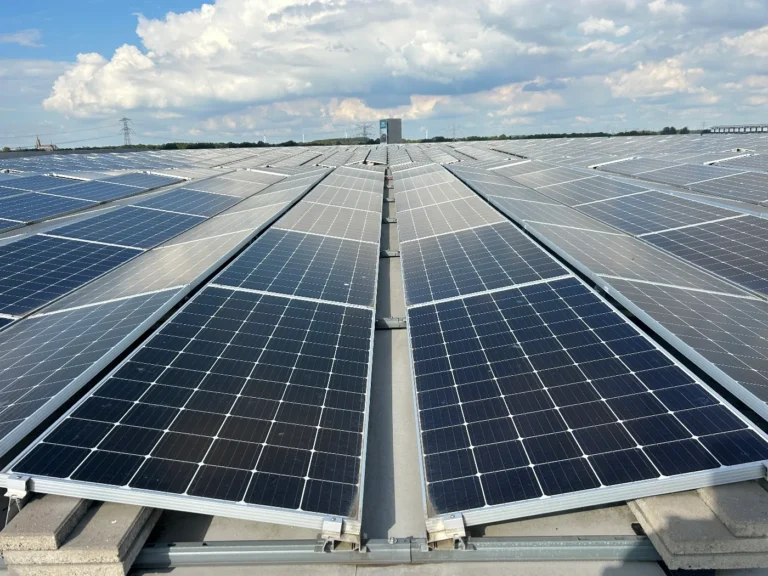
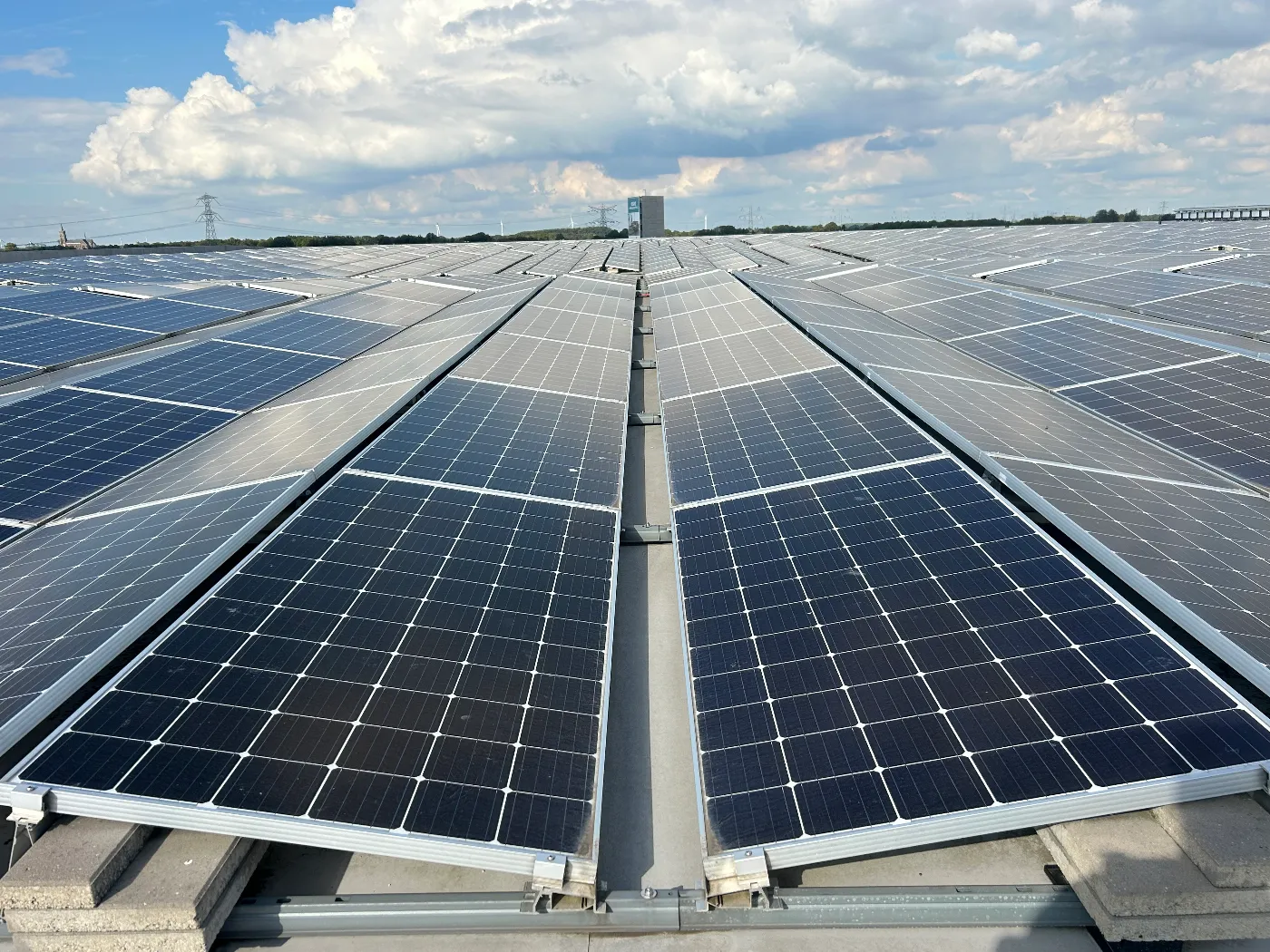
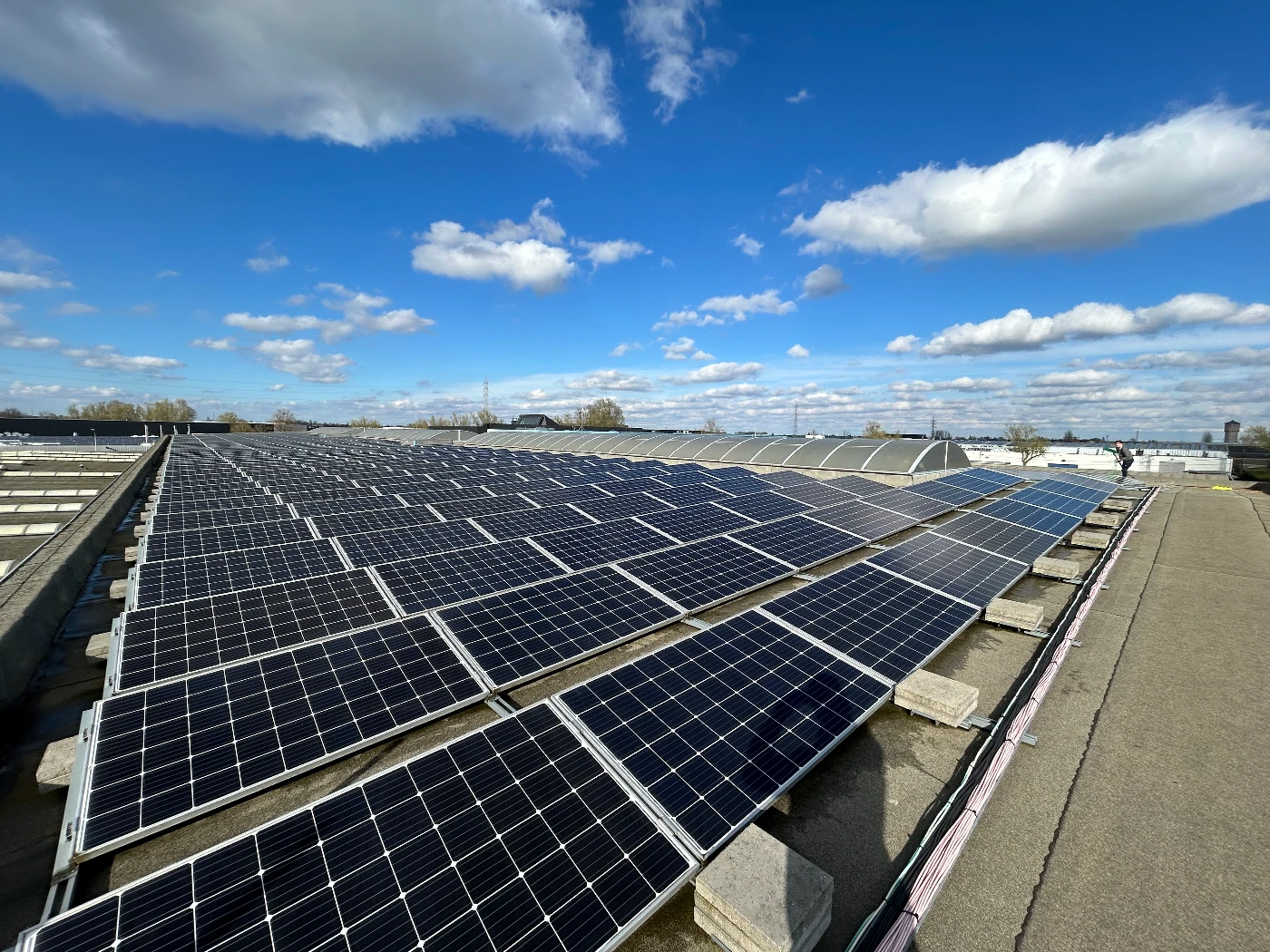
Roof setup cleaning
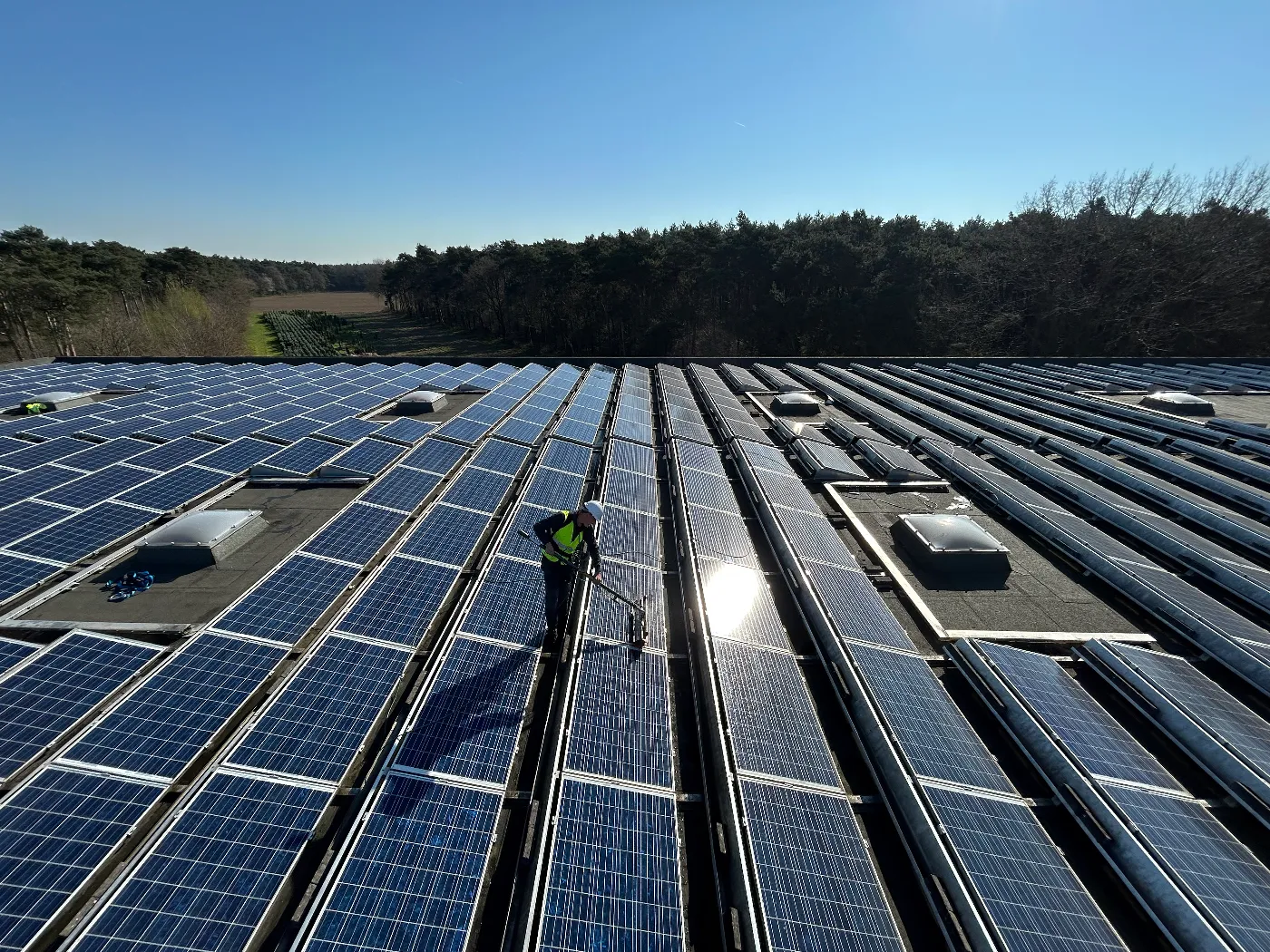
Do you have solar panels on your home or business roof? Then this is the ideal option. We use safe (often robot-assisted) techniques to clear your roof system of dirt, bird droppings and dust, so you can enjoy high efficiency again.
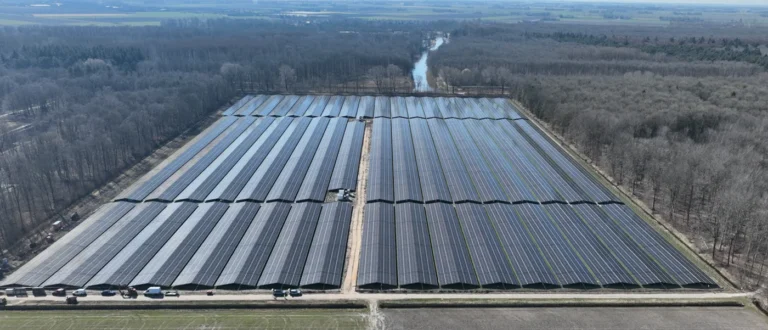
Ground setup cleaning
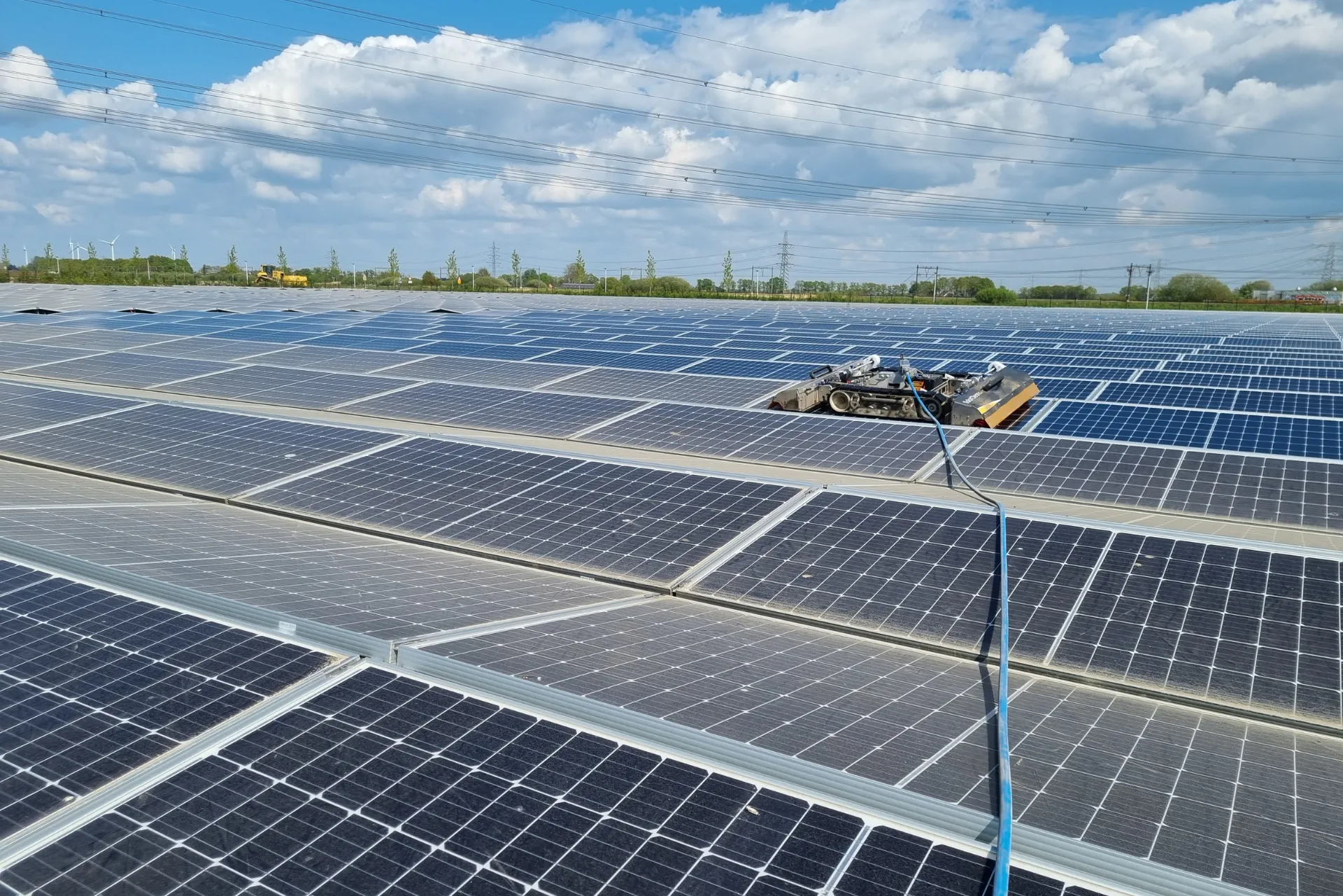
For systems mounted directly on the ground, we offer an efficient and safe cleaning service. Thanks to our advanced robotic technology and expertise, your system will stay free of dirt and perform at its best.

Cleaning floating rig
Do you have solar panels on water? We clean floating installations using specialised methods so that algae and other dirt do not stand a chance. This ensures you have an optimal and clean surface, even on water.
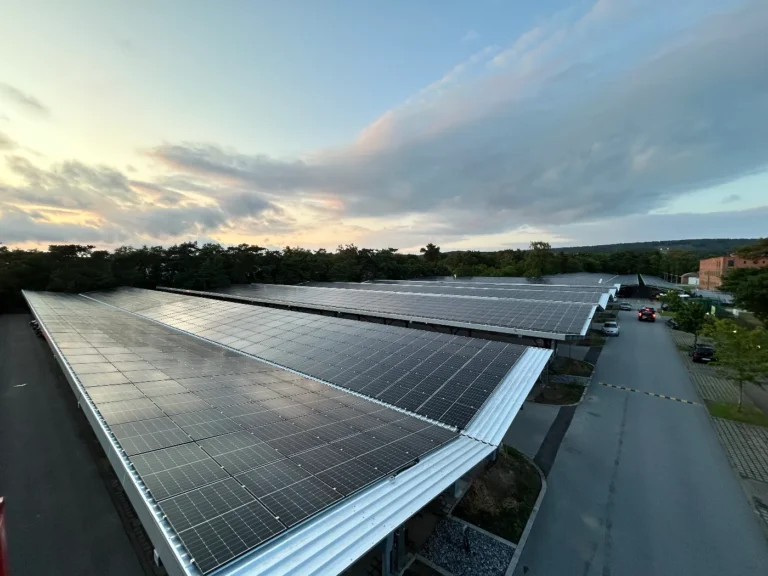
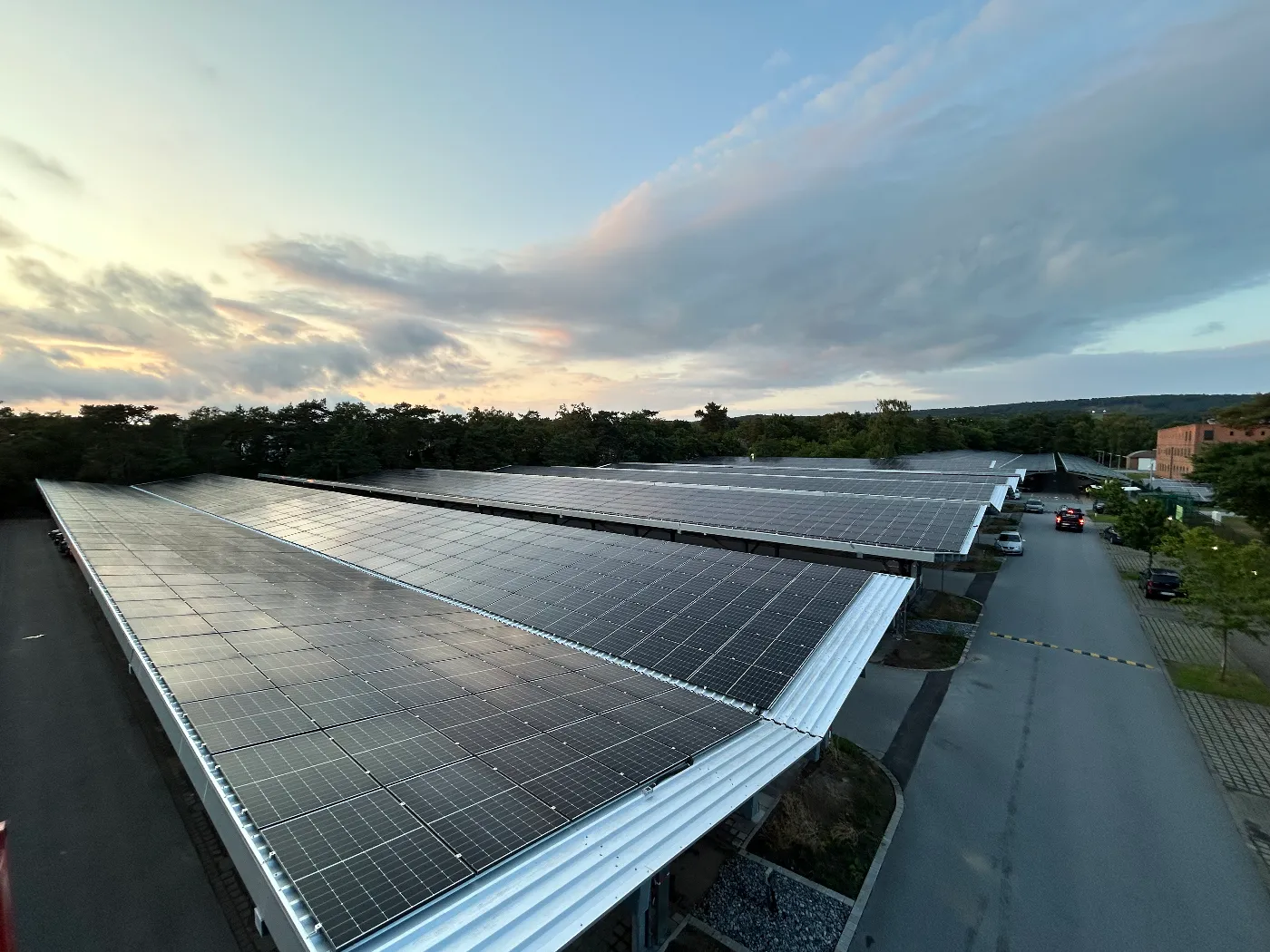
Carport set-up cleaning
A carport with solar panels is not only functional, but also a smart investment. Let us expertly clean your carport installation so that the panels last a long time and make the most of every ray of sunshine.
Looking for a specific country page?
This guide covers solar panel cleaning in general. For region coverage and customer case studies, check your country's page.
🇧🇪 Belgium
From Knokke to Arlon. Fixed rates in all 10 provinces, without distance surcharge.
🇳🇱 Netherlands
From Groningen to Maastricht. Dedicated routes for northern, central and southern Netherlands, including floating solar parks.
🇫🇷 France
From Lille to Marseille. Present monthly, with express teams for regions with Sahara sand.
🇩🇪 Germany
From Cologne to Munich. Focus on North Rhine-Westphalia and border regions, all of Germany for projects from 1,000 panels.
Is solar panel cleaning really necessary?
Short answer: it depends on your situation. For a standard pitched roof (>25° pitch) in an unpolluted environment, rain washes away most of the surface dust. In that case, annual cleaning is not necessarily necessary.
BUT, cleaning is called for when:
- Bird droppings or tree resin on the panels
- Visible haze, green deposit or lichen
- Panels lie flat or at low angle (<25°)
- Near agriculture, industry, highway or coast
- Noticeable drop in yield (check your inverter app)
- Panels have not been cleaned for 2+ years
Efficiency loss due to pollution:
- Light pollution (particulate matter): 2-5%
- Moderate pollution (pollen, dust): 5-10%
- Heavy pollution (bird droppings, lichen, cement and metal deposits): 10-40%
Source: various international studies + Solarco's own measurements
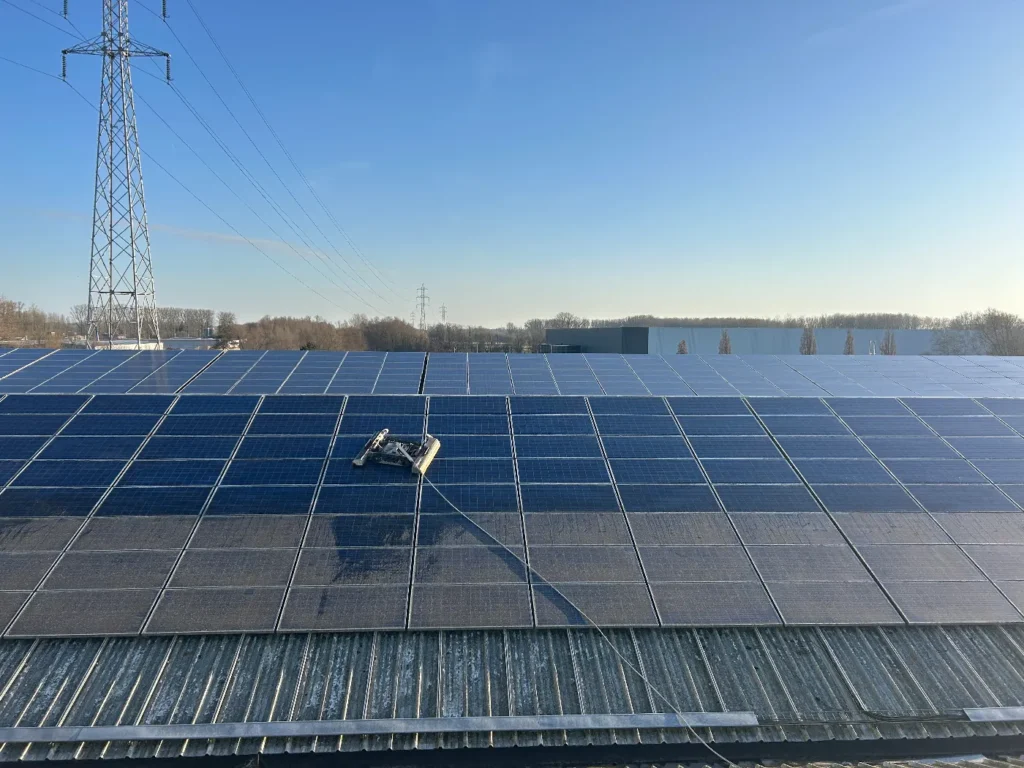
How often should you have your solar panels cleaned?
The ideal cleaning frequency varies from one situation to another. Below is an overview based on our experience.
| Situation | Main pollution | Frequency | Estimated loss of efficiency |
|---|---|---|---|
Sloping roof - residential area
Residential, urban or suburban environment, slope >15° |
Fine dust
Pollen
Bird droppings | 1× per 1-2 years |
2-5% |
Near industry or motorway
Logistics, production, near heavy traffic or industrial estate |
Soot
Fine dust
Industrial precipitation
Rubber particles | 1-2× per year |
5-15% |
Flat roof or low pitch
Slope <15°, commercial buildings, sheds, stables |
Stagnant water
Algae
Leaves
Moss formation | 1-2× per year |
5-15% |
Near agriculture
Fields, animal husbandry, stables with ridge ventilation |
Ammonia
Dust & sand
Pollen & resin
Bird droppings | 1-2× per year |
8-20% |
Coastal
Within 10 km of the coast, exposed to sea breezes |
Salt precipitation
Sand
Algae
Seagull poop | 1-2× per year |
5-15% |
Solar farm / large commercial
Ground installations, floating installations, >500 panels |
Raw material
Bird colonies
Weeds/shade
Sahara sand | 2-4× per year |
10-25% |
After exceptional circumstances
Sahara dust, pollen storm, yard activities, prolonged drought |
Sahara sand
Construction dust
Extreme pollen | Ad hoc turn |
Variable |
Cleaning solar panels yourself: roadmap
⚠️ Safety first: never work on the roof without fall protection. Consider a telescopic brush you use to work from the ground.
Step 1: Choose the right moment
Early morning or cloudy day (prevents thermal shock and rapid drying)
Step 2: Remove loose dirt
Use a soft brush or leaf blower
Step 3: Clean with pure water
Preferably use osmosis or demineralised water → Never: high-pressure cleaner, abrasive sponges, household detergents (Dreft, green soap)
Self-cleaning vs. professional cleaning
An honest comparison so you make the right choice for your situation.
Getting solar panels professionally cleaned
Getting solar panels cleaned doesn't have to be complicated. You request a quote, we schedule a date, and our team does the rest - you don't even have to be there. Afterwards, you will receive a report with before and after photos. No hassles, no surprises, no additional costs.
Our 4-step approach
Thorough pre-inspection
Visual + thermographic check of your installation. We identify hotspots and damage before cleaning.
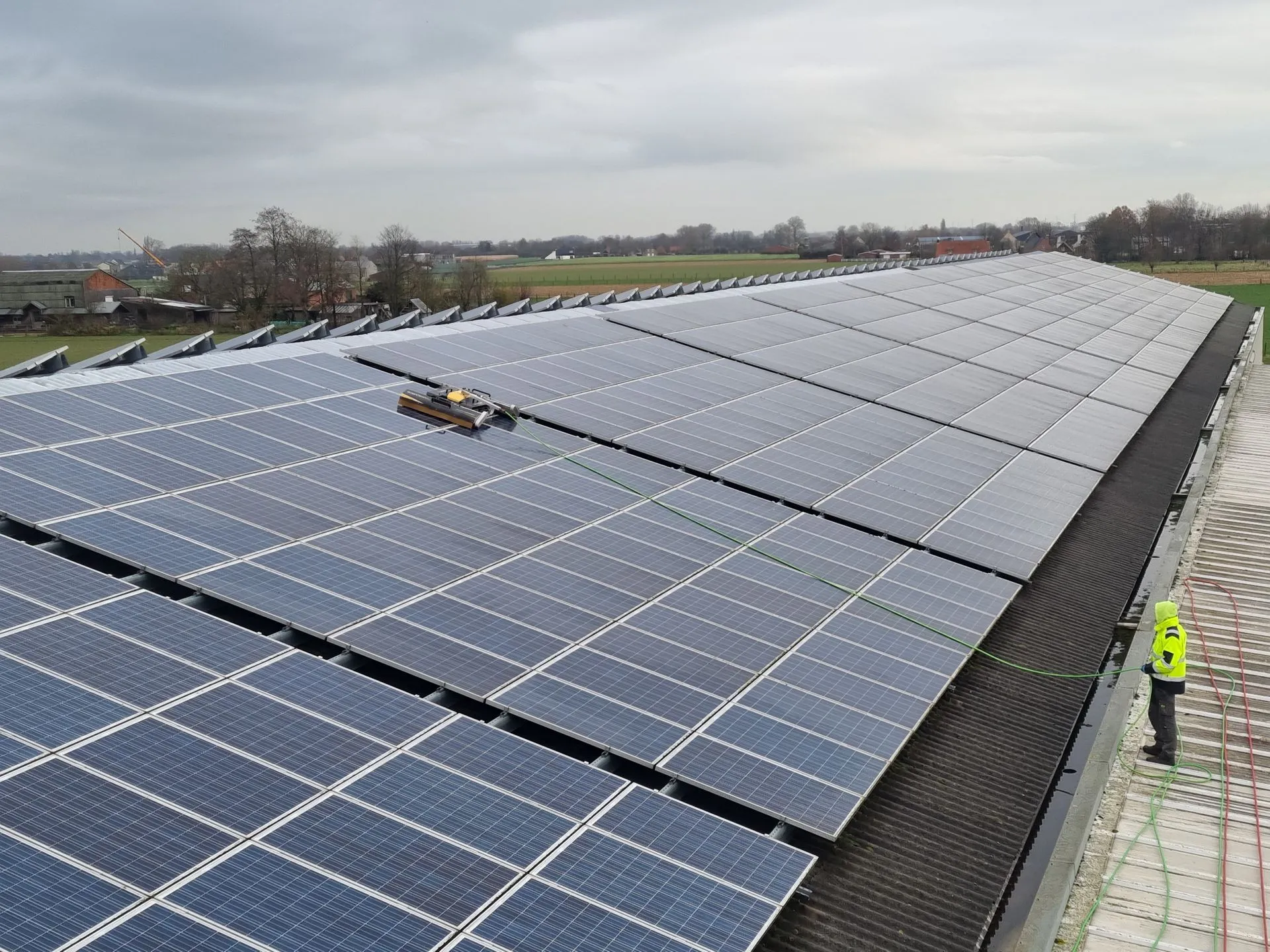
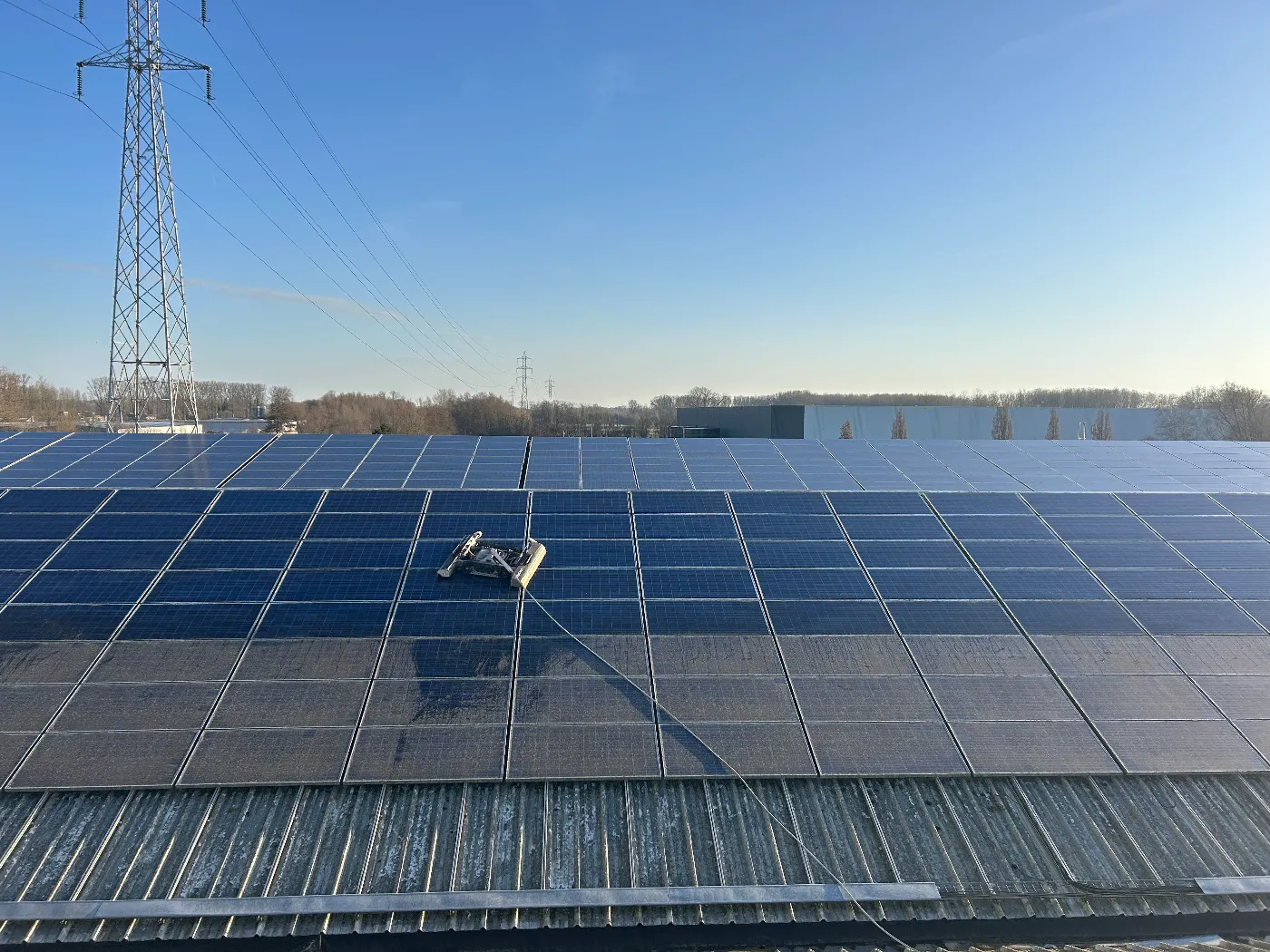
Robotic cleaning with osmosis water
Our certified cleaning robots operate on battery, without chemicals. Osmosis water dissolves all dirt and leaves no streaks or residue.
Quality control
After cleaning, we recheck each panel. You will receive a detailed report with before and after photos.
Aftercare and Advice
Based on your installation, environment and production data we draw up an optimal cleaning calendar.
Why companies choose Solarco
Professional and environmentally friendly
Solarco uses professional techniques to clean your solar panels, including robotic cleaning systems and osmosis water. This is not only better for your panels, but also better for the environment as no harsh cleaning agents are involved in our solar panel cleaning.
Safety first
We always work according to strict safety guidelines. Our operators are fully certified and trained to work on aerial platforms and roofs. Moreover, we have comprehensive insurance that covers any kind of risk or liability. This allows us to safely clean solar panels.
Innovative cleaning robots
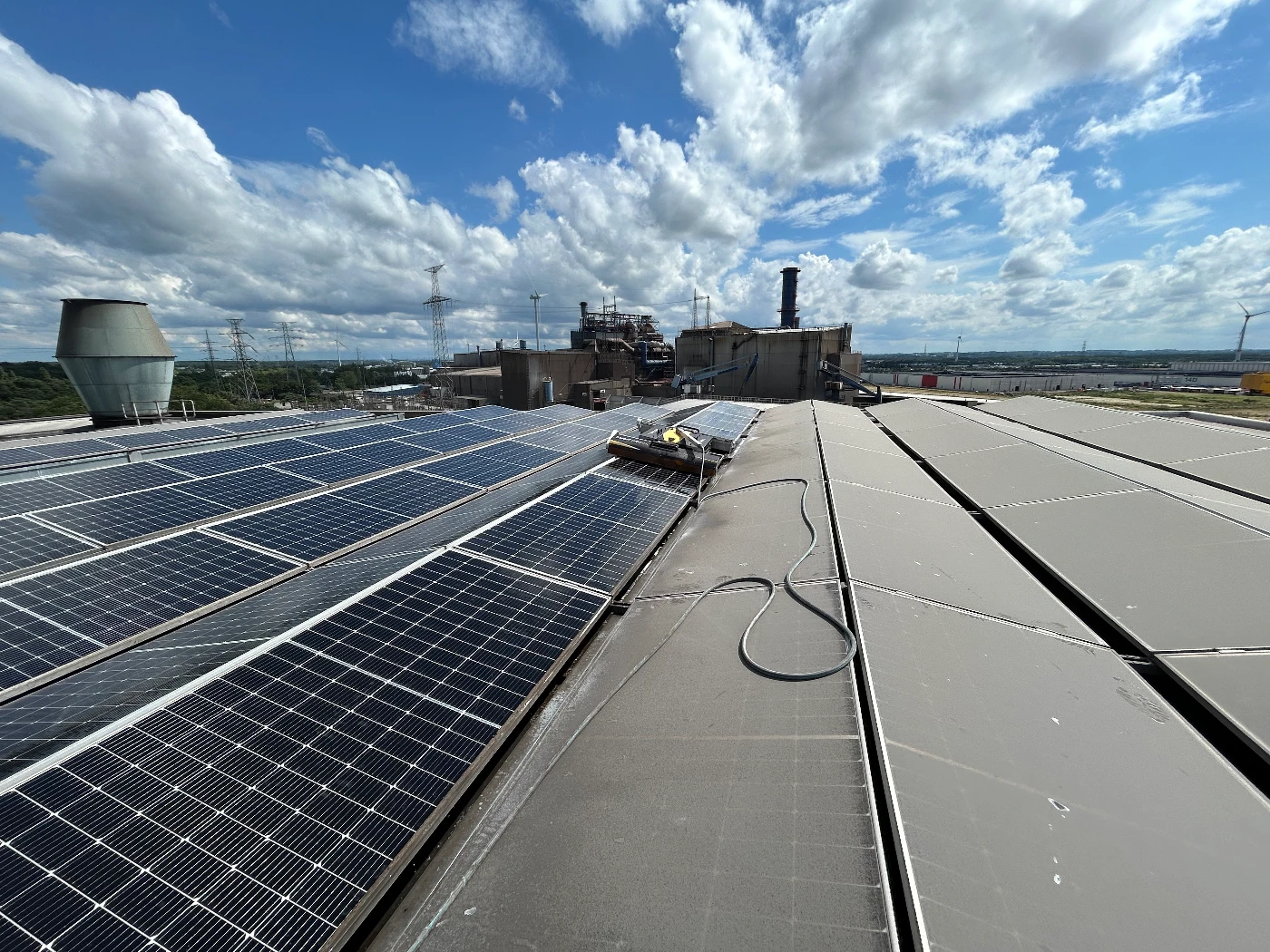
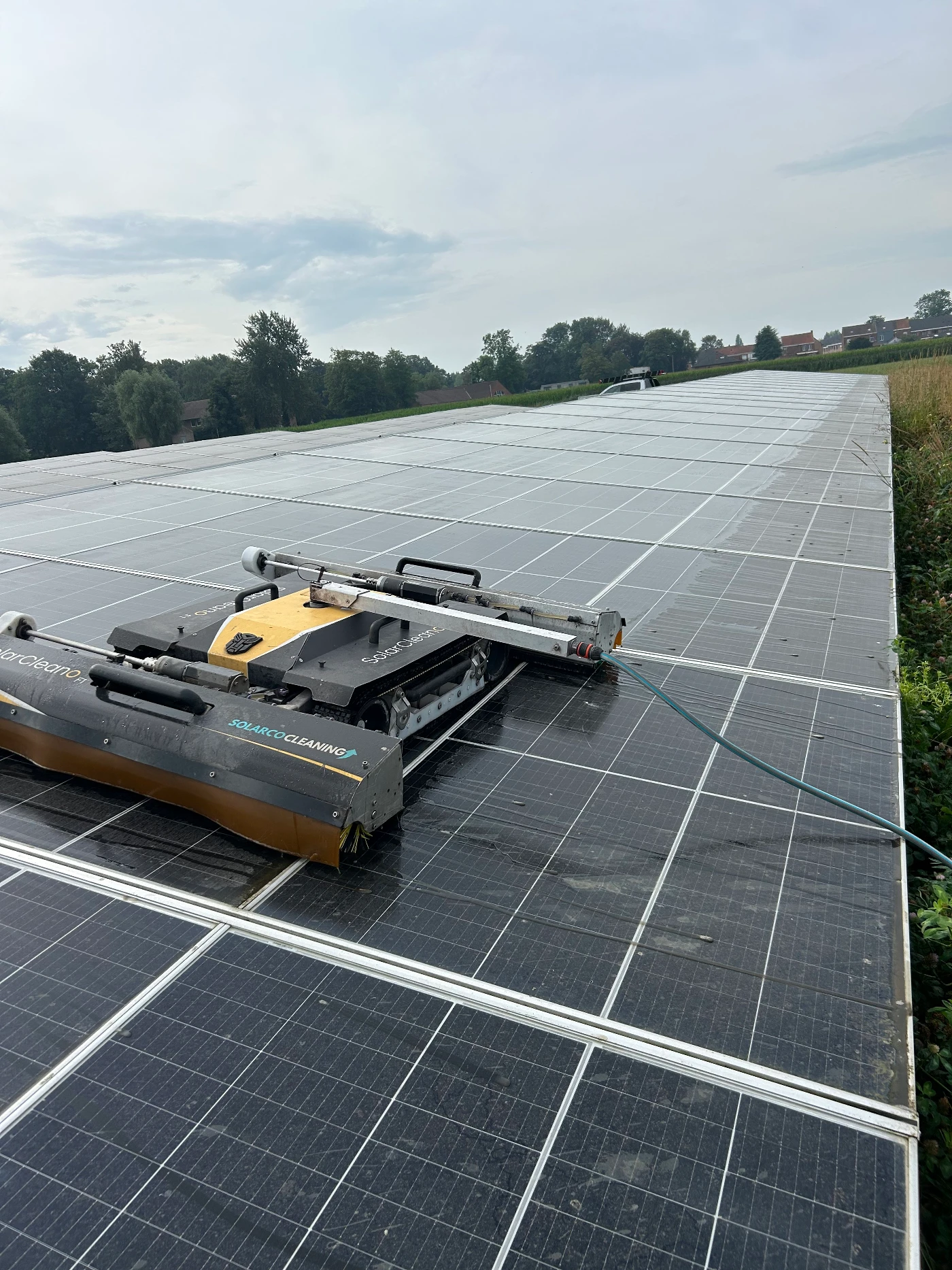
For large solar parks or extensive roof installations, Solarco deploys robot cleaners. These robots run on batteries and are certified by renowned module manufacturers. The robot can quickly and evenly clean large installations of solar panels without damaging the panels.
Price solar panel cleaning
The cost of professional solar panel cleaning depends on several factors: the number of panels, the type of installation (private, commercial or industrial), the accessibility of the roof and the degree of soiling. This is why at Solarco we do not work with standard prices, but make a customised quote for each situation: honest, transparent and with no surprises afterwards.
Would you like to know what a cleaning for your installation will cost? Request your personal quote without obligation below. You will receive a clear proposal, including inspection and report, within 24 hours.
Advantages of professional solar panel cleaning at Solarco
- Higher efficiency: Several studies show that cleaning solar panels can provide an efficiency improvement of a few percent to as much as 15%, depending on the degree of contamination.
- Longer lifespan: By preventing dirt build-up and hot spots, your entire system will last longer.
- Safety and warranty: Many manufacturers recommend professional cleaning to maintain the warranty. Climbing a roof yourself is also not without risk.
- Time savings: With the right tools and experience, we can take care of a large installation in a short time, while you yourself spend your precious time on other things.
- Sustainable approach: Osmosis water and robotic cleaning minimise the use of harmful chemicals, which is better for the environment as well as for the panels themselves.

Solar panel cleaning all over Belgium, the Netherlands, Germany and France.
At Solarco, we have carried out an impressive range of cleaning projects: from residential and commercial roofs to large-scale solar parks. Our specialists provided shiny clean panels in towns and villages throughout Flanders, and are active in the rest of Belgium, the Netherlands and even France. Thanks to our mobile cleaning units and years of experience, we guarantee a thorough, sustainable approach every time - regardless of the size or location of your installation.



Frequently asked questions about solar panel cleaning
Can I use a pressure washer on my solar panels?
No, never use a pressure washer. The high water pressure can damage the seals around the cells, affect the anti-reflection coating and cause micro-scratches that you cannot see with the naked eye. Moreover, water can be forced under the panels and into the cabling, resulting in short circuits. Instead, use a soft brush with osmosis water or engage a professional.
What is osmosis water and why is it better than tap water?
Osmosis water is water from which all minerals, lime, salts and impurities have been filtered through a membrane filter. Tap water contains lime and minerals that leave white streaks and stains on the glass when it dries - these deposits reduce light transmission and attract new dirt faster. Osmosis water dries completely streak-free, so your panels stay clean longer and capture maximum sunlight.
Does my warranty expire if I clean my solar panels myself?
It depends on your manufacturer and the method you use. Most module manufacturers explicitly exclude damage caused by improper cleaning from the warranty - think of using pressure washers, abrasives or aggressive chemicals. Professional cleaning with osmosis water and soft brushes does meet the conditions of all major manufacturers. Always keep your cleaning report as proof in case of a warranty claim.
What are hotspots and can cleaning prevent them?
Hotspots are areas on a solar panel that become locally overheated because part of the cell is covered - for example, by stubborn bird droppings, leaves or moss. The covered cell no longer produces energy but has to let the current through from the other cells, causing resistance and heat. Over time, this can permanently damage the cell. Regular cleaning removes the dirt build-up that causes hotspots, and at a professional turn, existing hotspots are detected via thermographic inspection.
Can I clean my solar panels with Dreft, green soap or all-purpose cleaner? v
No. Household cleaners such as Dreft, green soap, all-purpose cleaner and car shampoo attack the glass's dirt-repellent coating. As a result, dirt actually adheres faster, your efficiency drops and the surface becomes more susceptible to scratches. Abrasives and window scrapers should also be avoided. Only clean your panels with osmosis or demineralised water and a soft brush or sponge.
At what time of day and year is it best to clean my solar panels?
The best season is the early spring (March-April), just before the sunniest months which account for about 70% of your annual yield. Preferably clean in the early morning or on a cloudy day. If you clean in full sun, the water dries too quickly, causing stains. Moreover, panels in the sun are extremely hot - cold water on a hot panel can cause thermal shock and micro-cracks.
How do I know if my solar panels need cleaning?
There are three signals: visual - you see a grey haze, spots, bird droppings or green deposits on the glass. Via your monitoring app - a gradual decline in performance ratio compared to comparable days or years. After special circumstances - think a Sahara sandstorm, prolonged drought, or construction work nearby. In doubt? Send us a photo of your installation via the quotation form and we will advise you free of charge and without obligation.
Companies we work with
These companies already rely on Solarco as their regular maintenance partner for their solar panels.










 English (UK)
  Nederlands (België)
  Français
  Deutsch