
Solar Panel Inspection and Maintenance
Will make sure that your solar panels performing at their best and free are hidden Any faults? At Solarco we carry out inspections and maintenance all in one place a clear approach. We’re starting always with a preventative approach maintenance, a thorough inspection and thermography, so that we can assess the condition of your A clear view of the installation receive. If there are any defects out, then we’ll take that addressed to, with a correction maintenance. That way, you can rely on a with peace of mind efficient and safe energy generation.
Our services at a glance
Preventive maintenance
During a full inspection, we check the entire installation, from panels to cables, supplemented by thermography where necessary. You will receive a clear report with recommendations, so that you know exactly what steps are needed to keep your 100% system operational.

Corrective maintenance
If the preventative maintenance assessment reveals that repairs are needed, we’ll carry them out for you. We’ll rectify any faults identified and ensure your system remains safe and cost-effective.
Why are inspections and maintenance so important?
Solar panels are exposed to all sorts of conditions throughout the year: from bright sunshine and high temperatures to storms, rain and temperature fluctuations. Over time, these conditions lead to wear and tear or minor faults that are not always visible to the naked eye, such as microcracks, loose wiring or heat damage (hotspots).
That is precisely why we follow a two-step approach. Preventive maintenance identifies problems at an early stage, ensuring you benefit from a consistently high yield and extending the lifespan of your panels. Corrective maintenance resolves any faults identified before they develop into major damage. Furthermore, properly functioning panels reduce the risk of short circuits or fire hazards, which improves the safety of your home or business premises.

How often is an inspection required?
Most experts recommend having your solar power system inspected at least once every two years. If you live in an area with high levels of dust, salt (near the sea) or heavy industry, an annual inspection may be advisable. An additional inspection is also advisable following extreme weather conditions, such as heavy hailstorms or storms.
At Solarco, we work with bespoke inspection plans. Together, we determine the ideal frequency, based on the age of the installation, its location and any local risks. This helps you maintain optimum efficiency and reduces the risk of unexpected problems.
How do we proceed at Solarco?
Visual inspection
We start every solar panel inspection with a careful visual check. Here, we pay attention to cracks in the glass, the condition of the frames and any discolouration or distortion. We also look at the fixings, clamps and cable entries, to make sure everything is still firmly in place.
Measurements and tests
Besides the visual check, we perform several measurements to make sure your system is functioning properly. These include measuring the DC voltage, checking the inverter and reading fault codes. This way, we detect possible anomalies at an early stage and can provide targeted advice.
Thermographic inspection (optional)
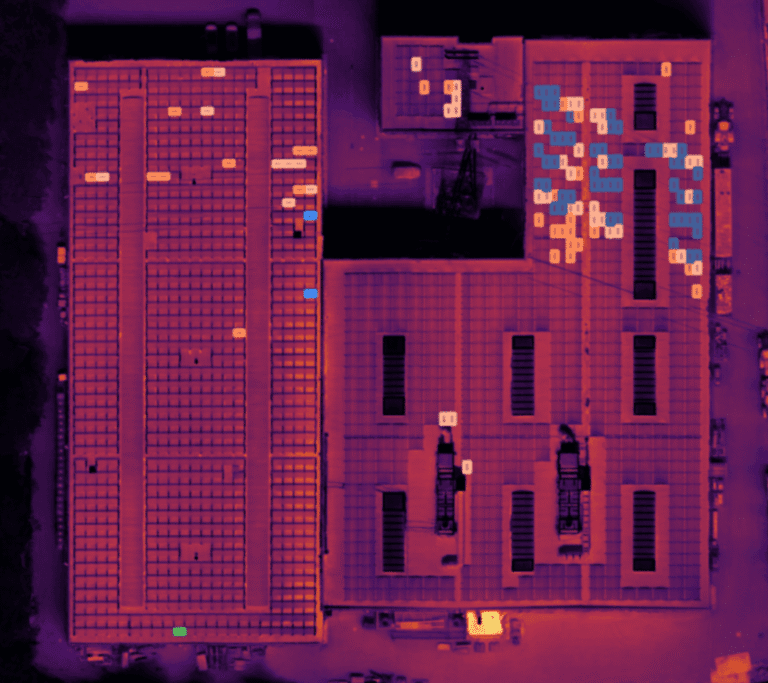
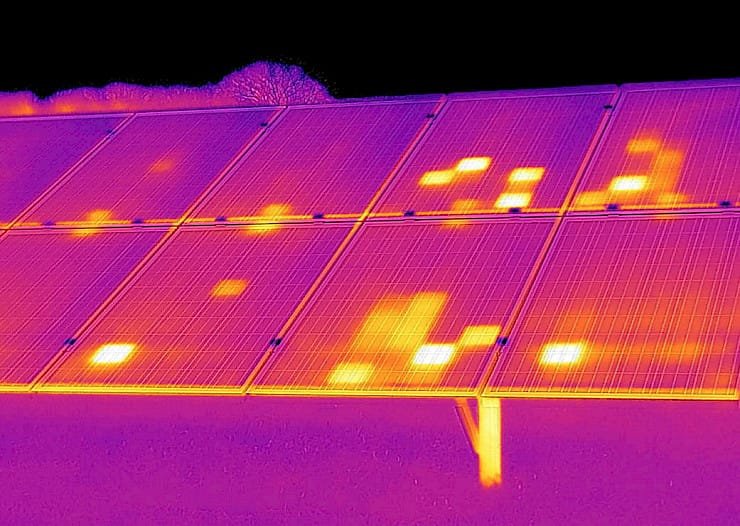
For an even deeper investigation, we deploy thermographic cameras. With this technology, we detect so-called hotspots on parts of a panel that become hotter than the rest. This can indicate damage, contamination or faulty cells. Thanks to the thermal images, you can immediately see if there are any spots where yield losses are occurring or where there could even be a fire hazard over time.
Benefits of a professional solar panel inspection
- Optimal performance: A thorough check prevents loss of efficiency and allows timely intervention.
- Longer lifespan: By spotting small defects early, you prevent bigger damage and extend the life of your panels.
- Security: An inspection reduces the risk of short circuits or fire hazards, giving extra peace of mind.
- Warranty retention: Many manufacturers and insurers make periodic checks mandatory to claim warranty or coverage.
- Sustainable investment: With a well-functioning system, you get the most out of your investment and contribute to a green future.

Frequently asked questions about solar panel inspection
Will I receive a report after the inspection?
Following the preventative inspection, you will receive a clear report setting out our findings and recommendations. It will detail exactly what steps are required to keep your system running optimally and securely, and whether corrective maintenance is advisable.
Do you carry out the repairs yourselves as well?
Yes. If any faults are identified during the inspection or thermographic survey, we don’t just stop at a report. We tackle the identified problems head-on – from loose cabling to damaged parts – so that you don’t have to look for another provider yourself.
What exactly does a thermographic inspection involve?
Using thermographic cameras – either drone-mounted or handheld – we visualise temperature differences in your panels. This enables us to detect hotspots, faulty cells and dirt that are invisible to the naked eye. This prevents a loss of efficiency and dangerous situations in the long term.
How often should I have my solar panels inspected?
Most experts recommend at least one inspection every two years. In areas with high levels of dust, salt or heavy industry, or following extreme weather conditions such as storms and hail, an annual inspection may be advisable. Together, we’ll draw up a bespoke plan based on the age, location and risks associated with your installation.
What is the difference between preventive and corrective maintenance?
Preventative maintenance involves inspections and thermographic surveys, which we use to assess the condition of your system and identify problems at an early stage. Corrective maintenance is only carried out if defects are found; in that case, we carry out the necessary repairs. This way, we only intervene where it is really necessary.
Why do you need to clean before having an inspection done?
Contamination disturbs thermographic and electrical measurements and can mask real defects, which is why: clean first, then measure, then decide. Clean panels are thus a prerequisite for a reliable inspection. This way, you avoid wrong conclusions about the true condition of the installation.
Do you offer maintenance for agriculture, industry and solar parks?
Yes, Solarco provides professional maintenance and cleaning for commercial roofs, farms, industrial plants and solar parks, with cleaning robots for large areas. We combine cleaning with thermographic inspection and green management, and work VCA-certified. For recurrent maintenance, we draw up a tailor-made contract.
What defects occur in commercial solar installations after 5 to 10 years?
After 5 to 10 years, outdated cabling and connectors often turn up, loose terminals and profiles, and microcracks, delamination and hotspots in the modules. Untreated, these lead to structural efficiency losses, recurrent inverter failures and increased fire and safety risks. A combination of visual, thermographic and electrical checks detects them in time.
What does Solarco's solar panel maintenance involve?
Maintenance includes a visual inspection for damage, loose wiring, broken terminals and hotspots, complemented by measurements and tests of the inverter and yield data, among others. In addition, green maintenance, such as mowing between panel rows, is included in the service. Regular maintenance extends lifespan, increases safety and helps maintain the manufacturer's warranty.
Why is green maintenance around solar panels important?
Even a small shadow can noticeably reduce efficiency, with overgrowth around and between the panels affecting yields. Overgrowth also hinders access for maintenance and can increase fire and damage risks. That's why Solarco keeps grass and weeds short, ecologically responsible and with a report after each visit.
Companies we work with
These companies already rely on Solarco as their regular maintenance partner for their solar panels.








 English (UK)
  Nederlands (België)
  Français
  Deutsch