Solar panel cleaning by the experts.
Dirty panels can cost you up to 30% of your yield. We clean every installation safely and streak-free, without affecting your manufacturer’s warranty.
- Average yield increase
- +8%
- Business clients
- 500+
- Countries: BE, NL, FR and DE
- 4
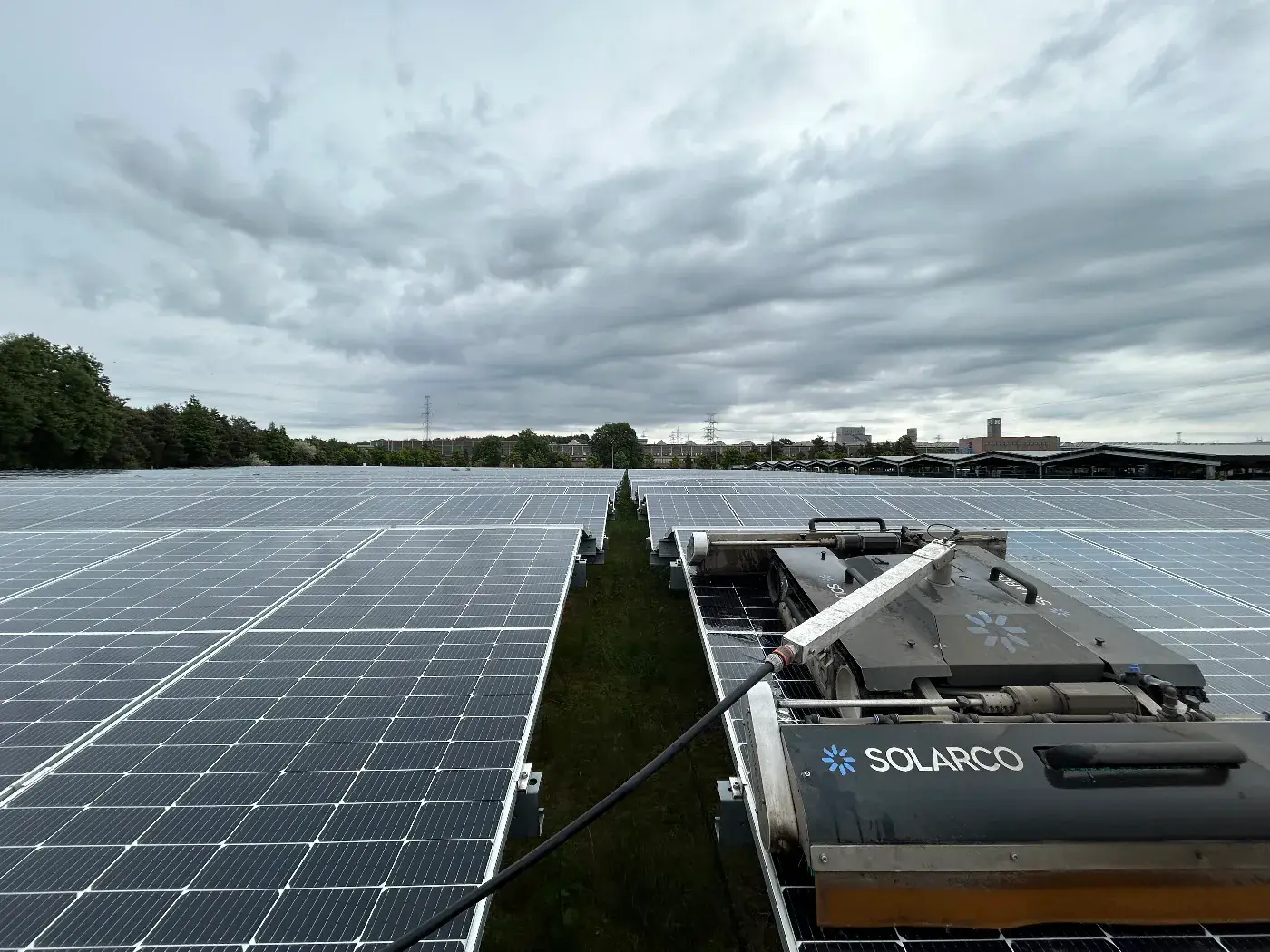
Solar panel cleaning by type of installation
On a roof, on the ground, over a car park or on the water: we tailor our method, equipment and scheduling to your PV installation.
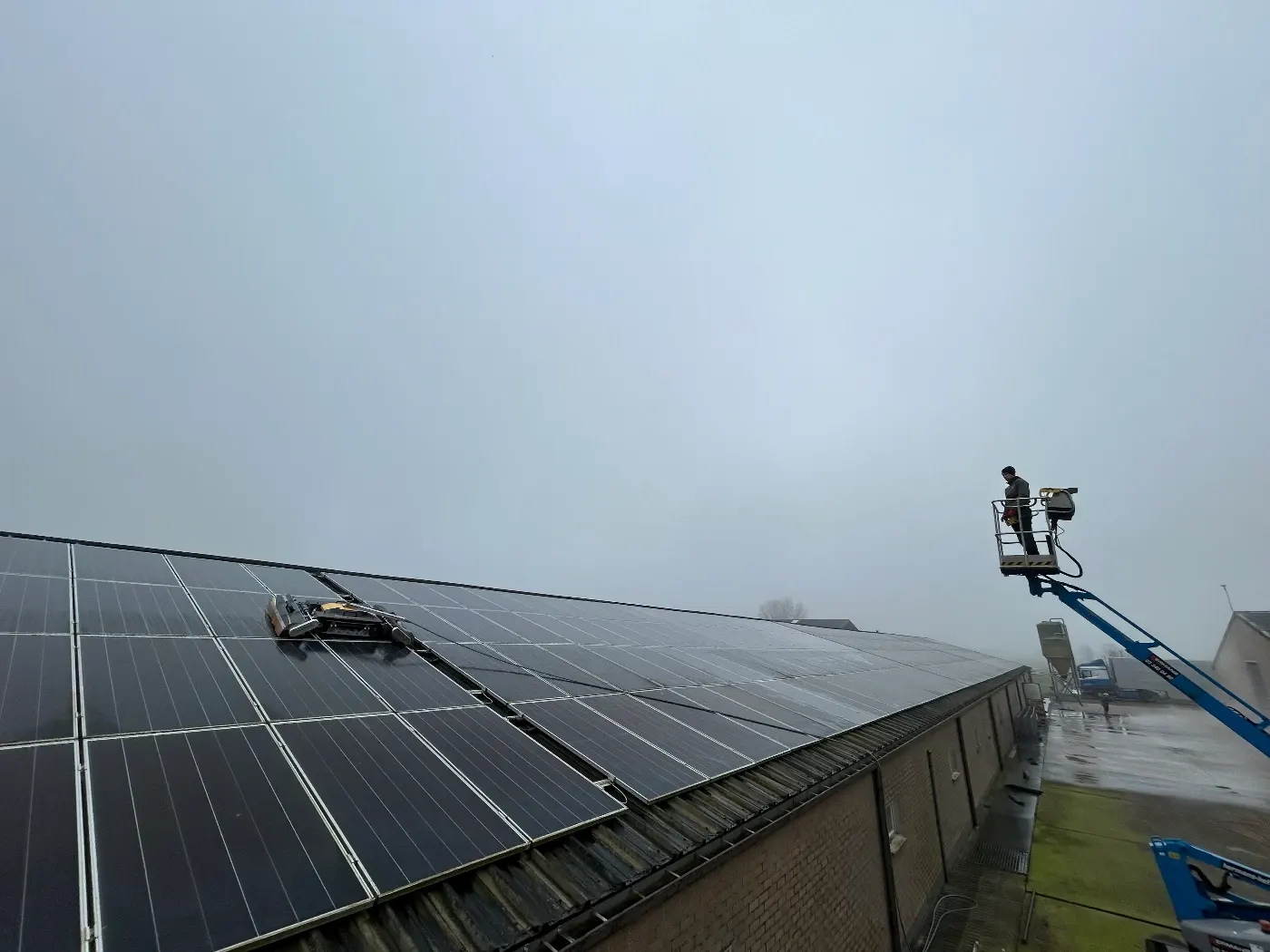
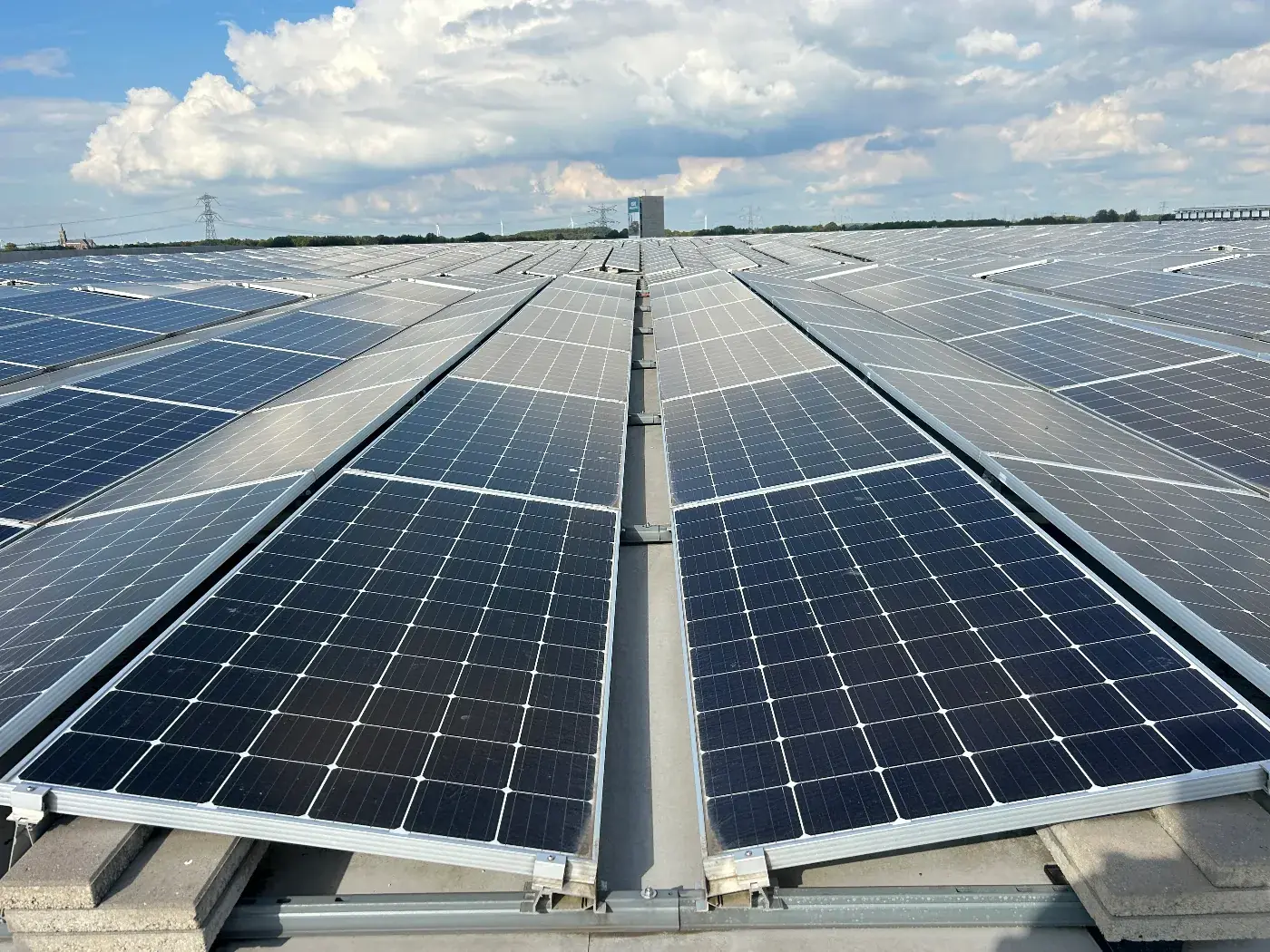 Rooftop installationsOn homes and business roofs, we safely remove dirt, bird droppings and dust, often with robots.
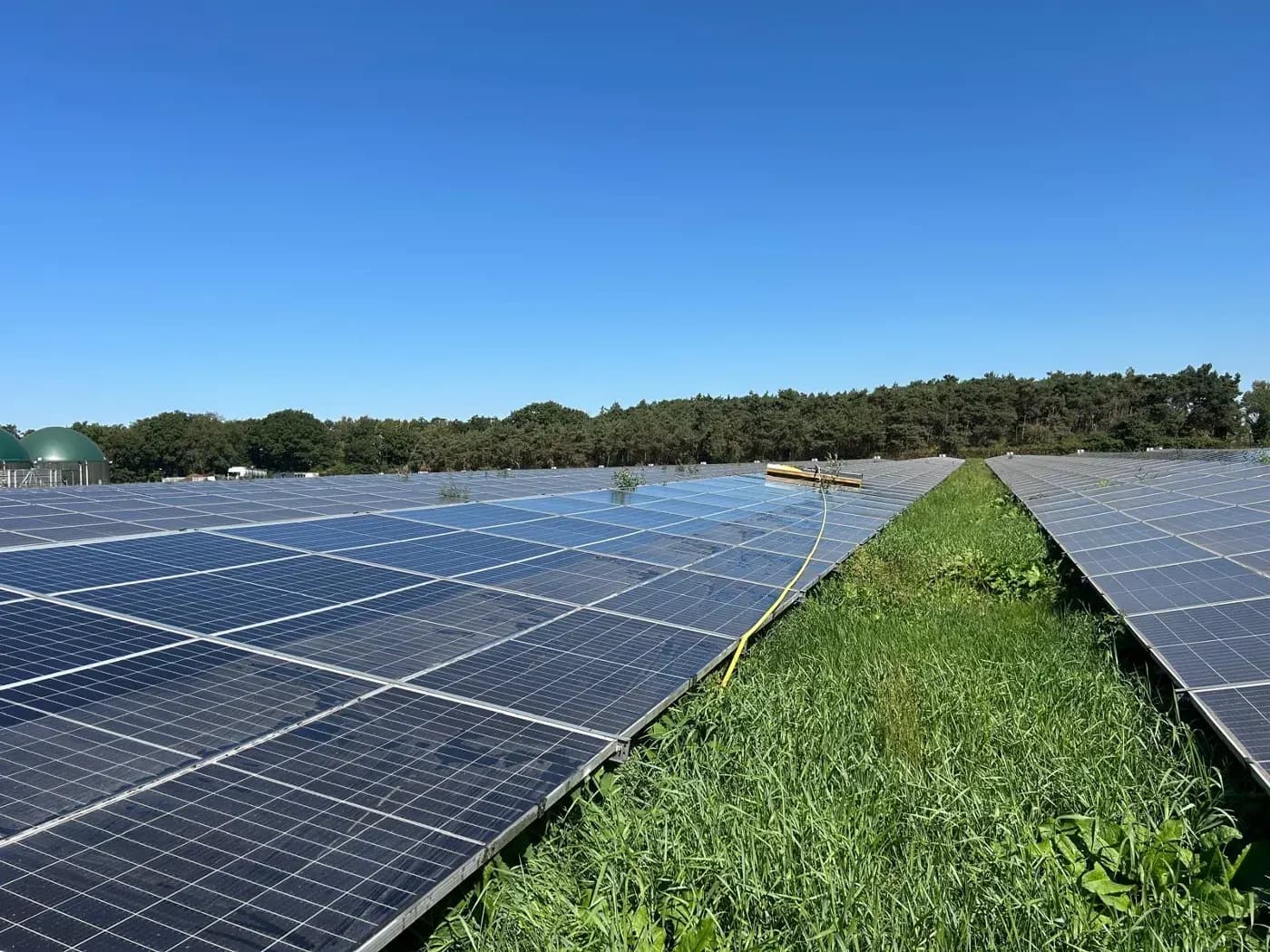
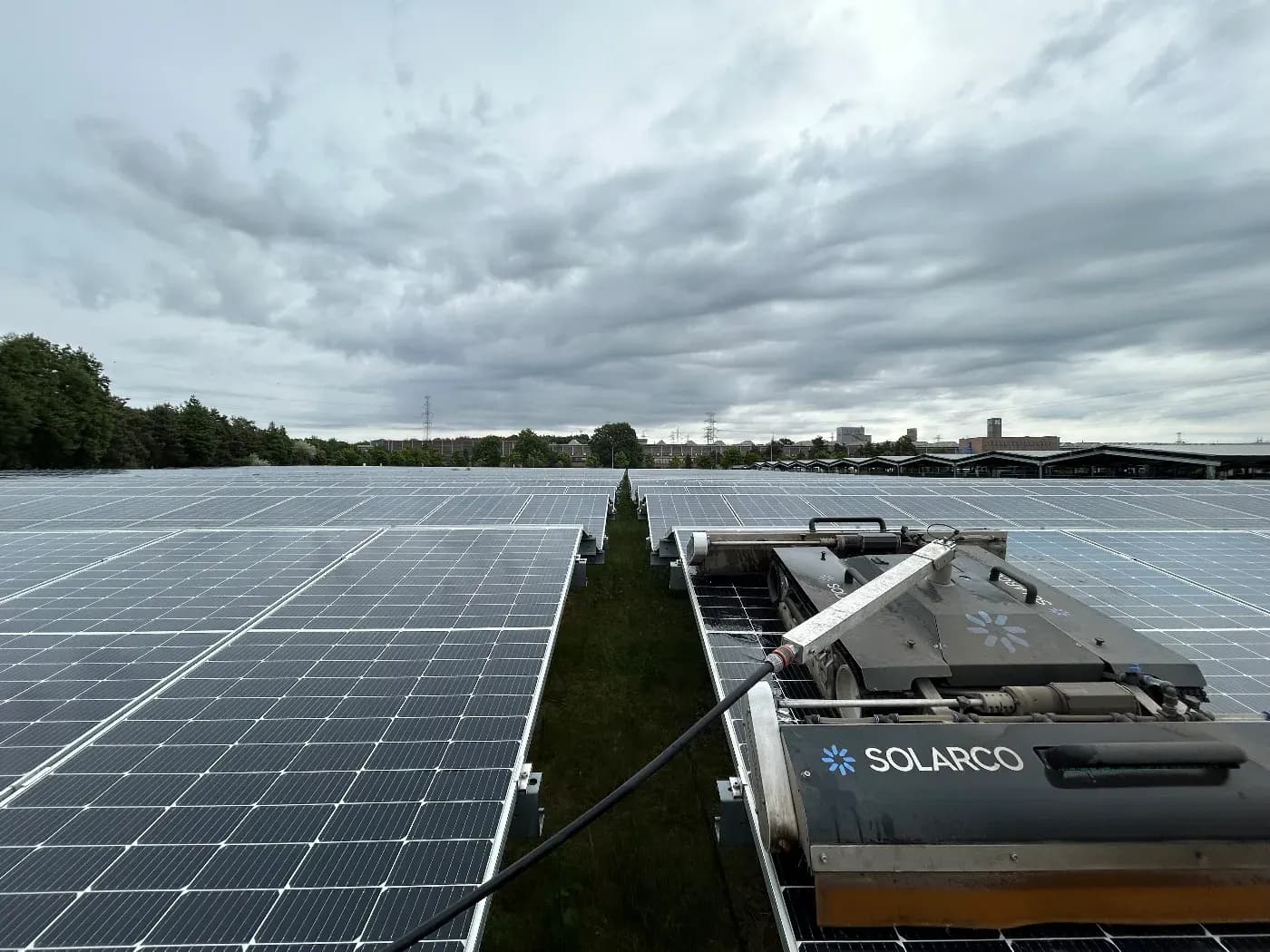
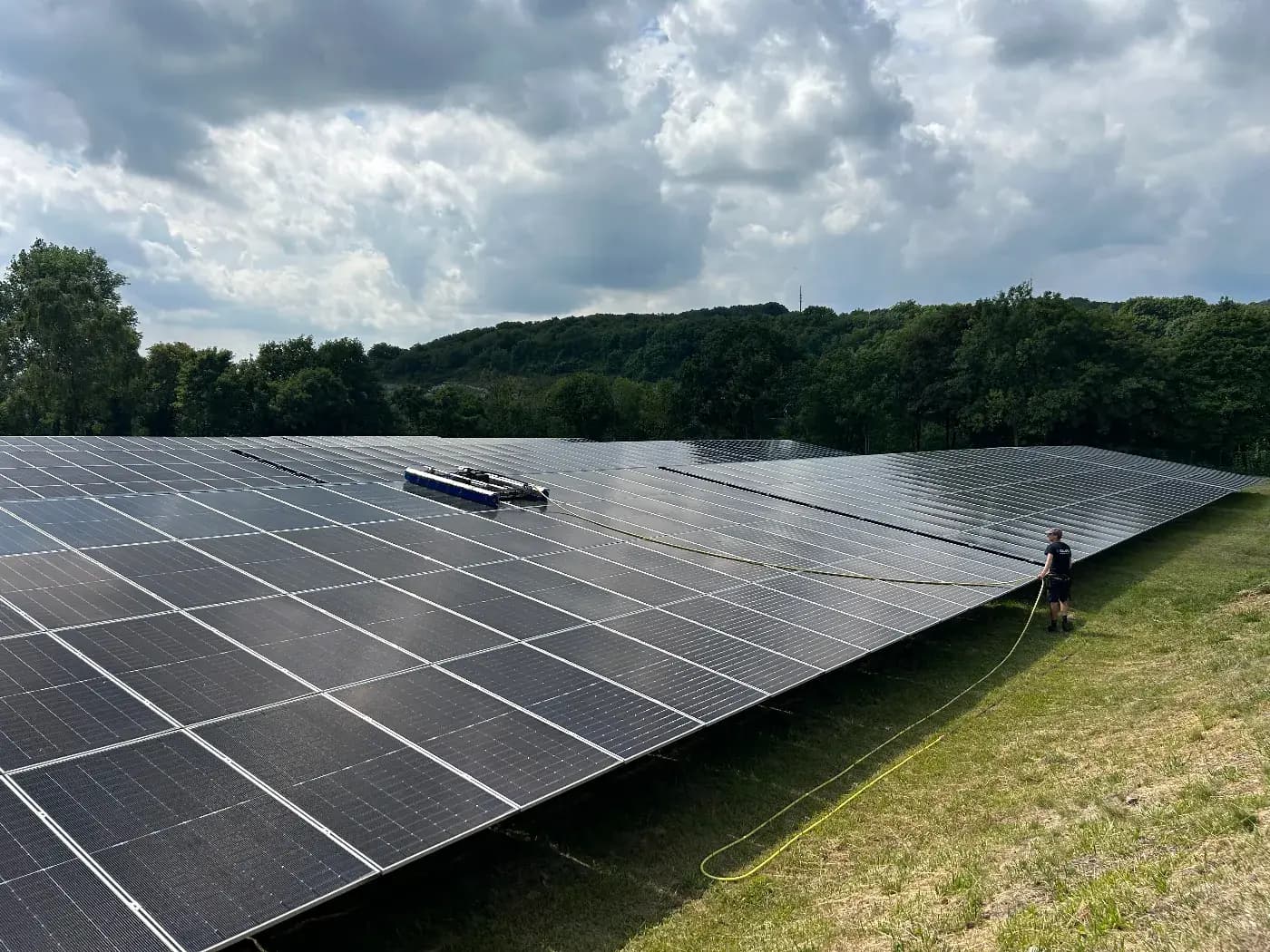 Ground-mounted installationsEfficient, safe cleaning of ground-mounted arrays and solar parks, with our robotic technology.
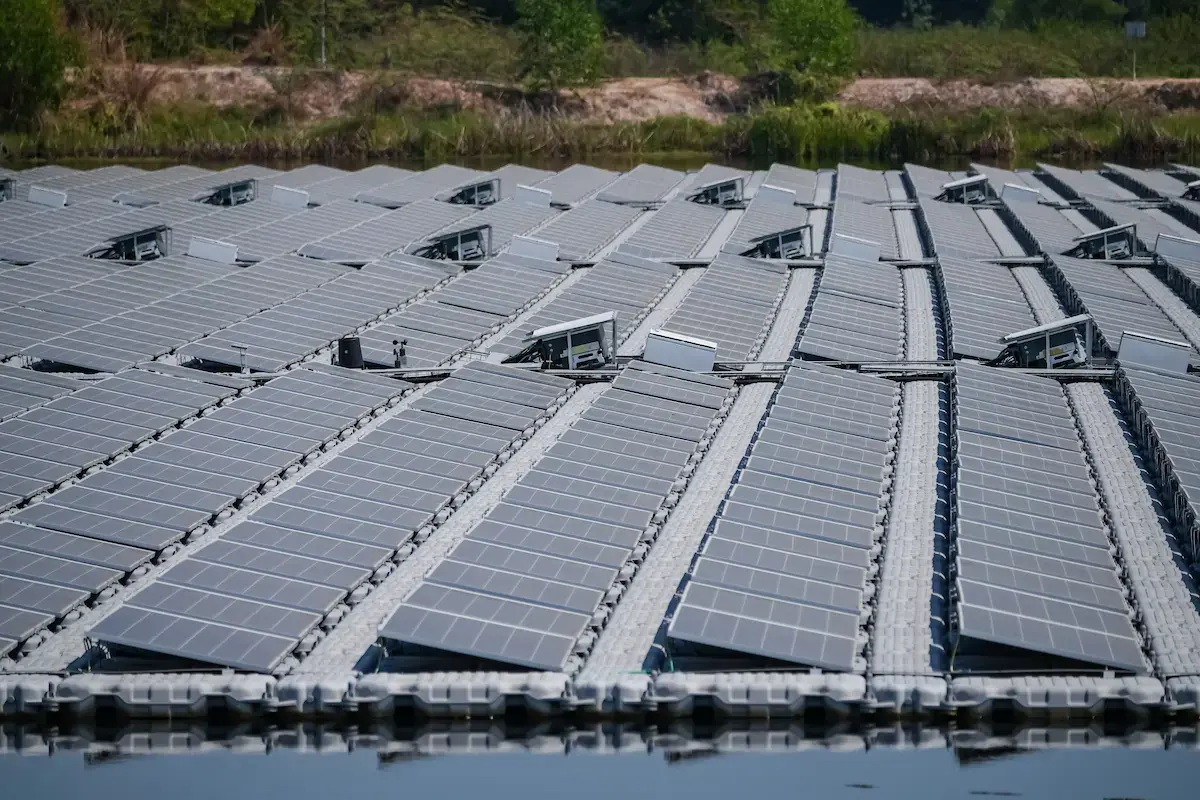 Floating installationsSpecialised cleaning on the water, so algae and other dirt don’t stand a chance.
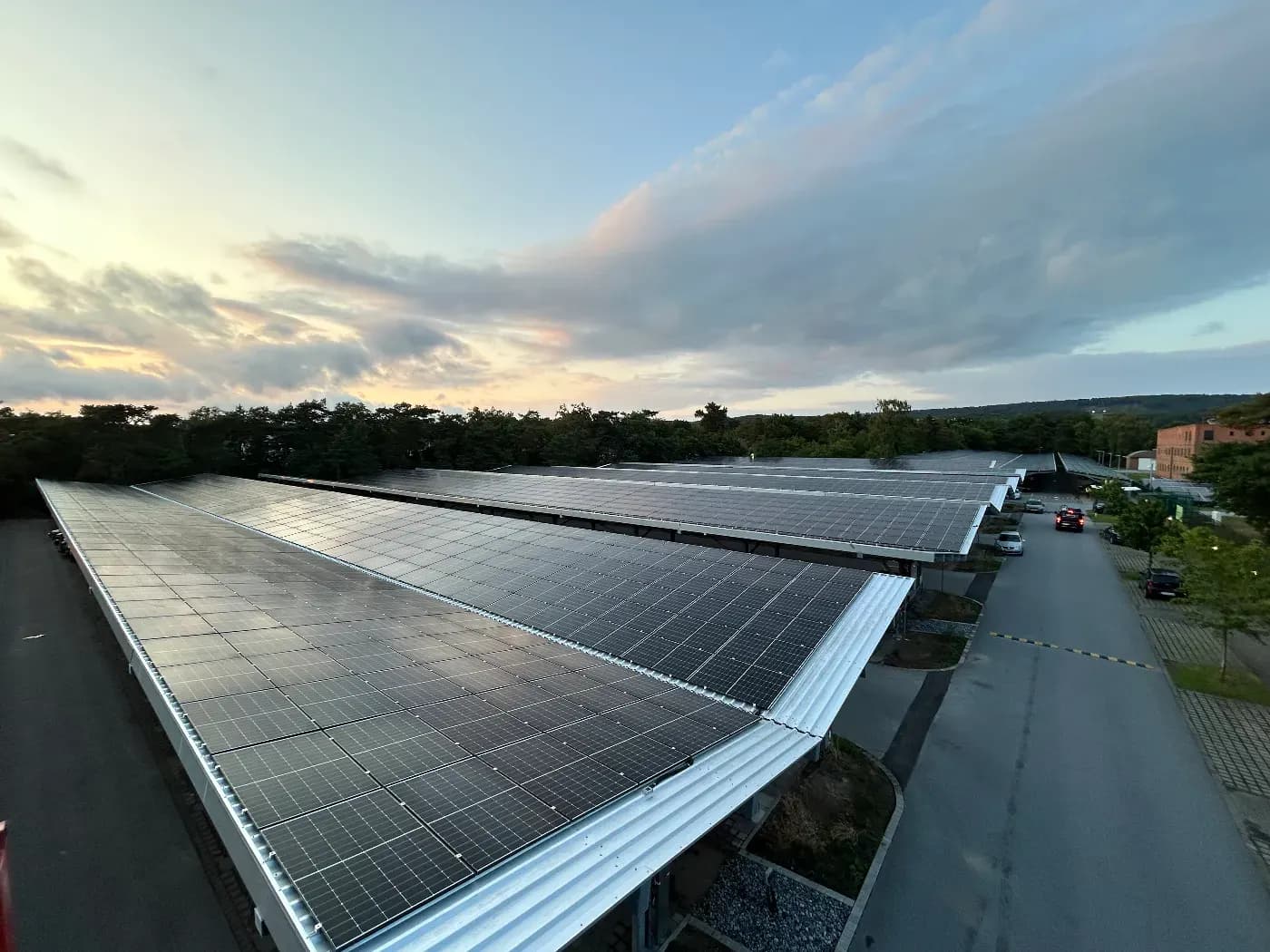
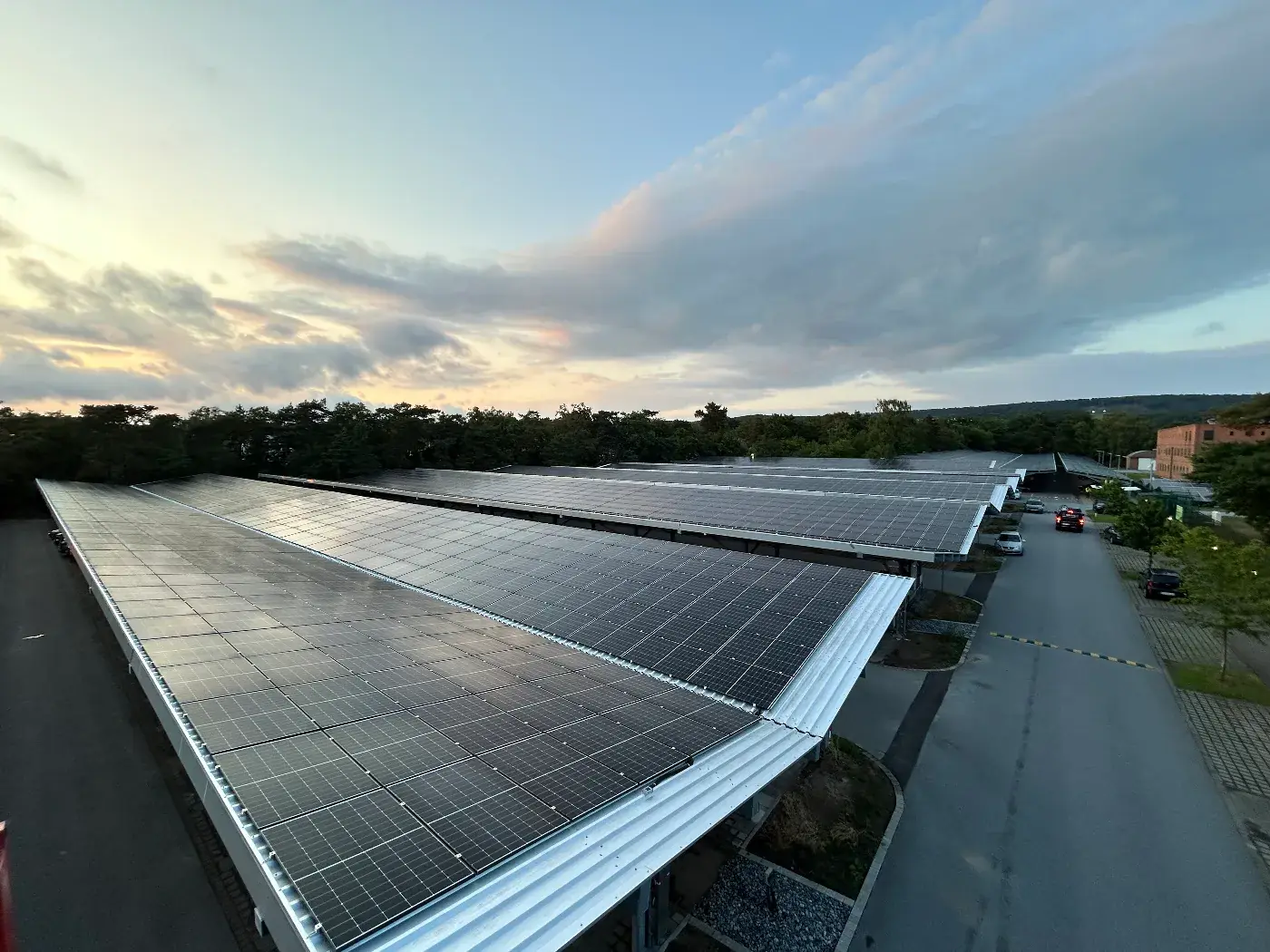 Solar carportsExpert cleaning of your carport, so the panels last longer and perform at their best.
Or choose your sector
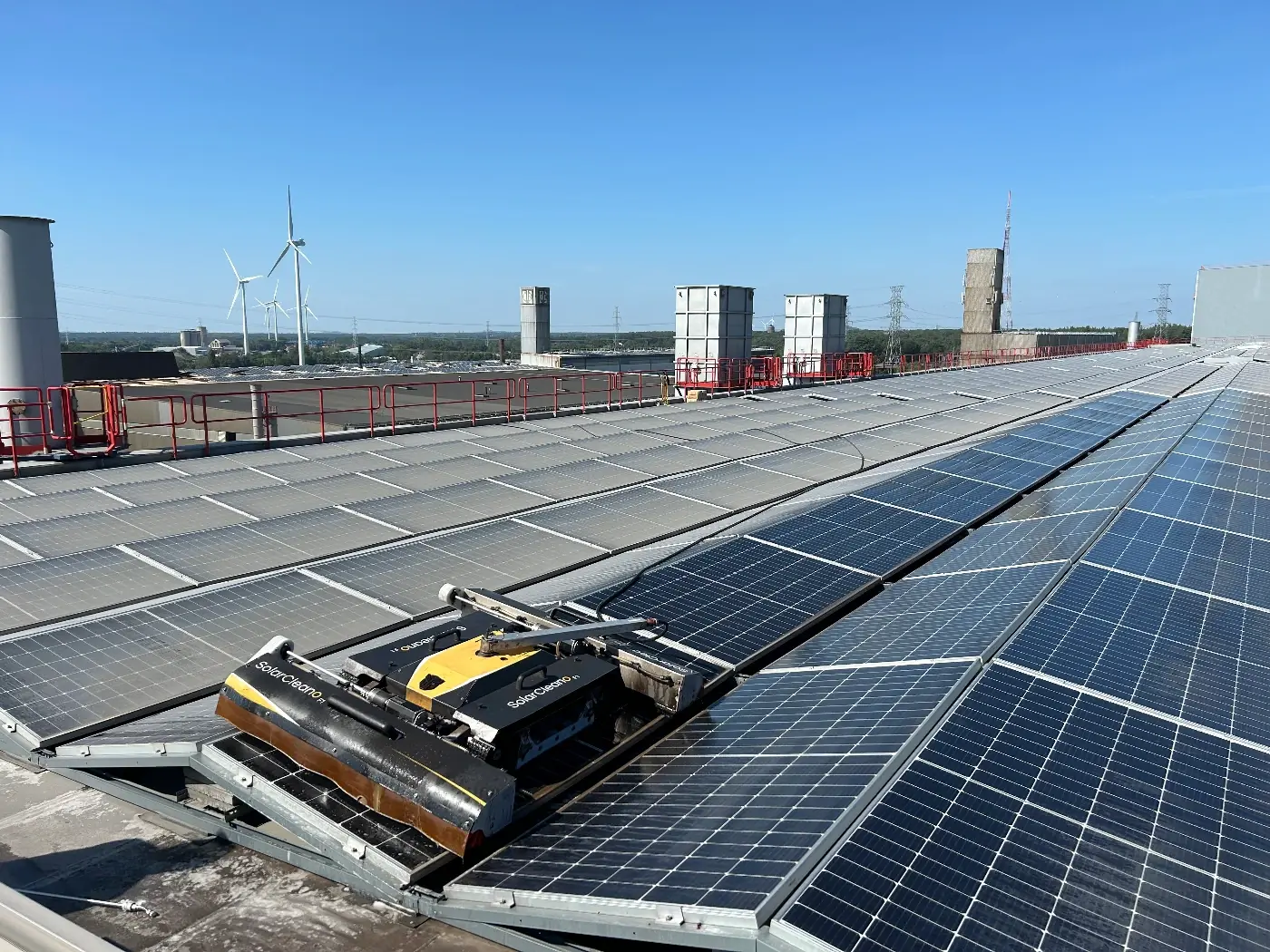 IndustryLarge-scale cleaning for factories, warehouses and production sites, with robots that clean up to 6,000 panels a day.
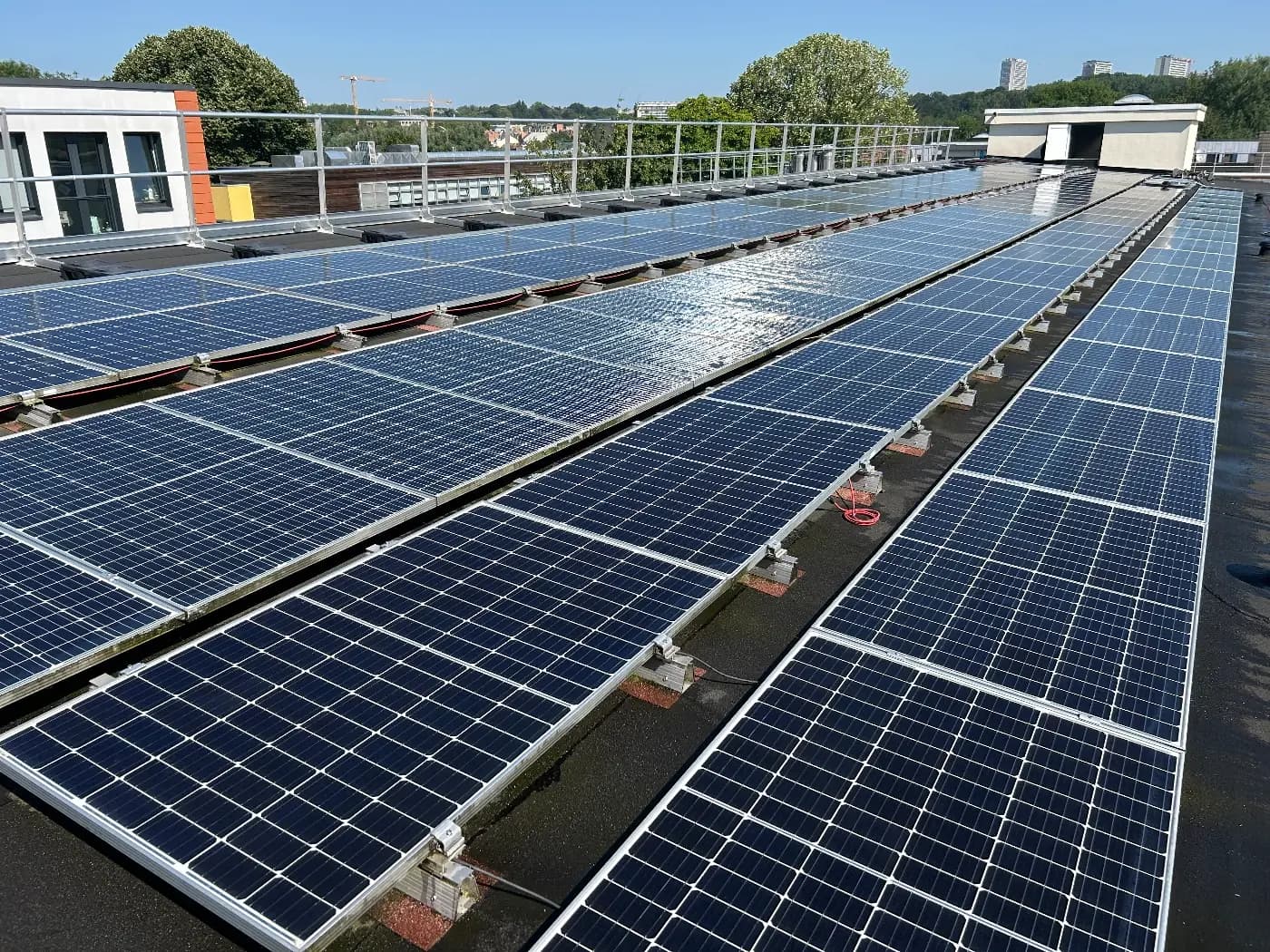 CommercialCleaning for business rooftops and commercial installations, without disrupting your operations.
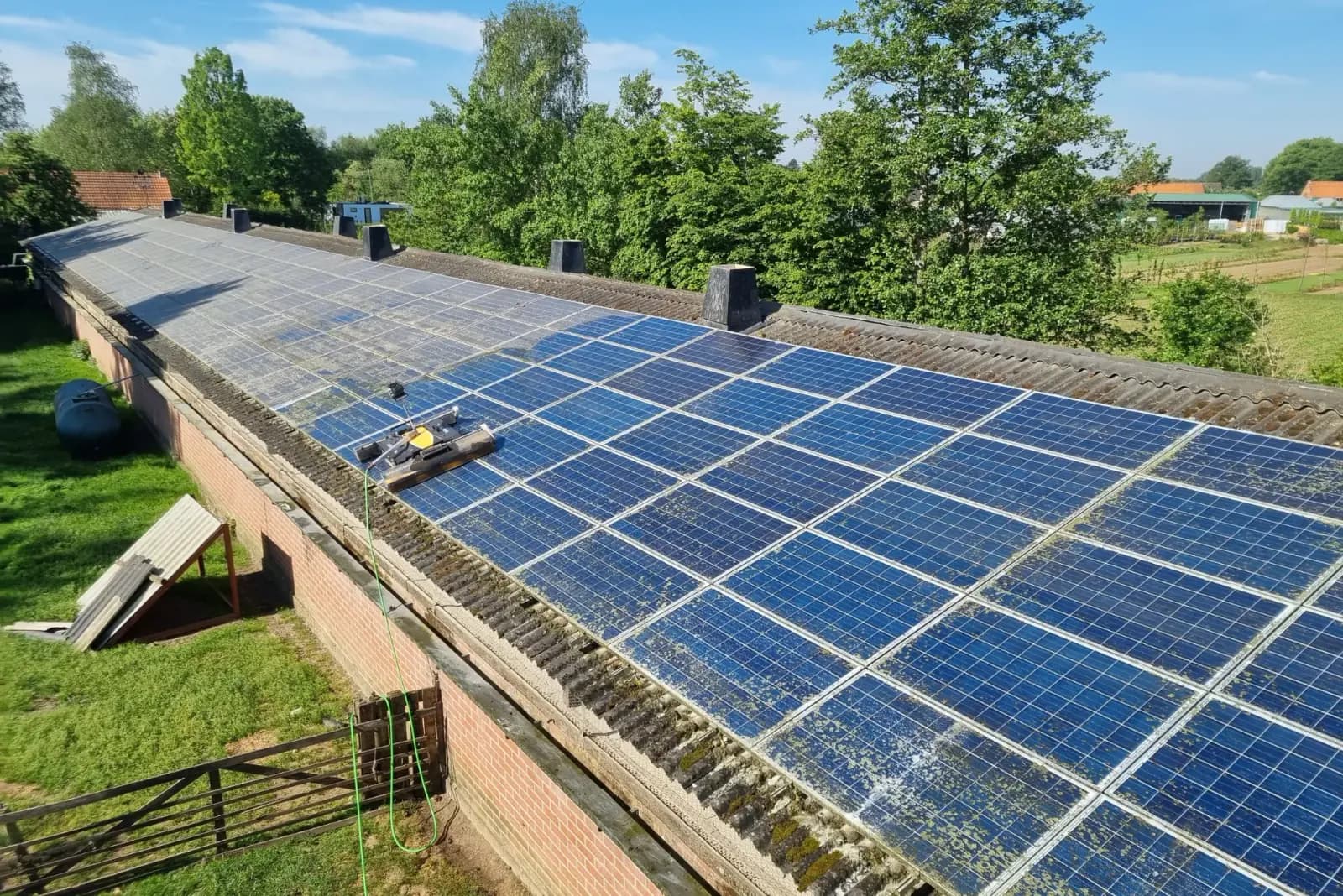 AgricultureCleaning for barns, sheds and agricultural roofs, planned around your operations and the seasons.
Looking for your country’s page?
This guide covers solar panel cleaning in general. For the regions we serve and projects near you, see the page for your country.
 BelgiumFrom Knokke to Arlon. Fixed rates in all ten provinces, with no travel surcharge.
 NetherlandsFrom Groningen to Maastricht. Regular routes across the north, centre and south of the Netherlands, floating solar parks included.
 FranceFrom Lille to Marseille. On site every month, with fast-response teams for regions hit by Saharan sand.
 GermanyFrom Cologne to Munich. Focused on North Rhine-Westphalia and the border regions, all of Germany for projects from 1,000 panels.
Is solar panel cleaning really necessary?
Rain washes away loose dust, but bird droppings, moss and grime stay put. Recognise any of these signs? Then it’s worth having your panels cleaned.
- Bird droppings or tree sap on the panels
- A visible haze, green film or lichen
- Panels that lie flat or at a low angle, below 25°
- Farmland, industry, a motorway or the coast nearby
- A noticeable drop in yield (check your inverter app)
- Panels that haven’t been cleaned for 2 years or more
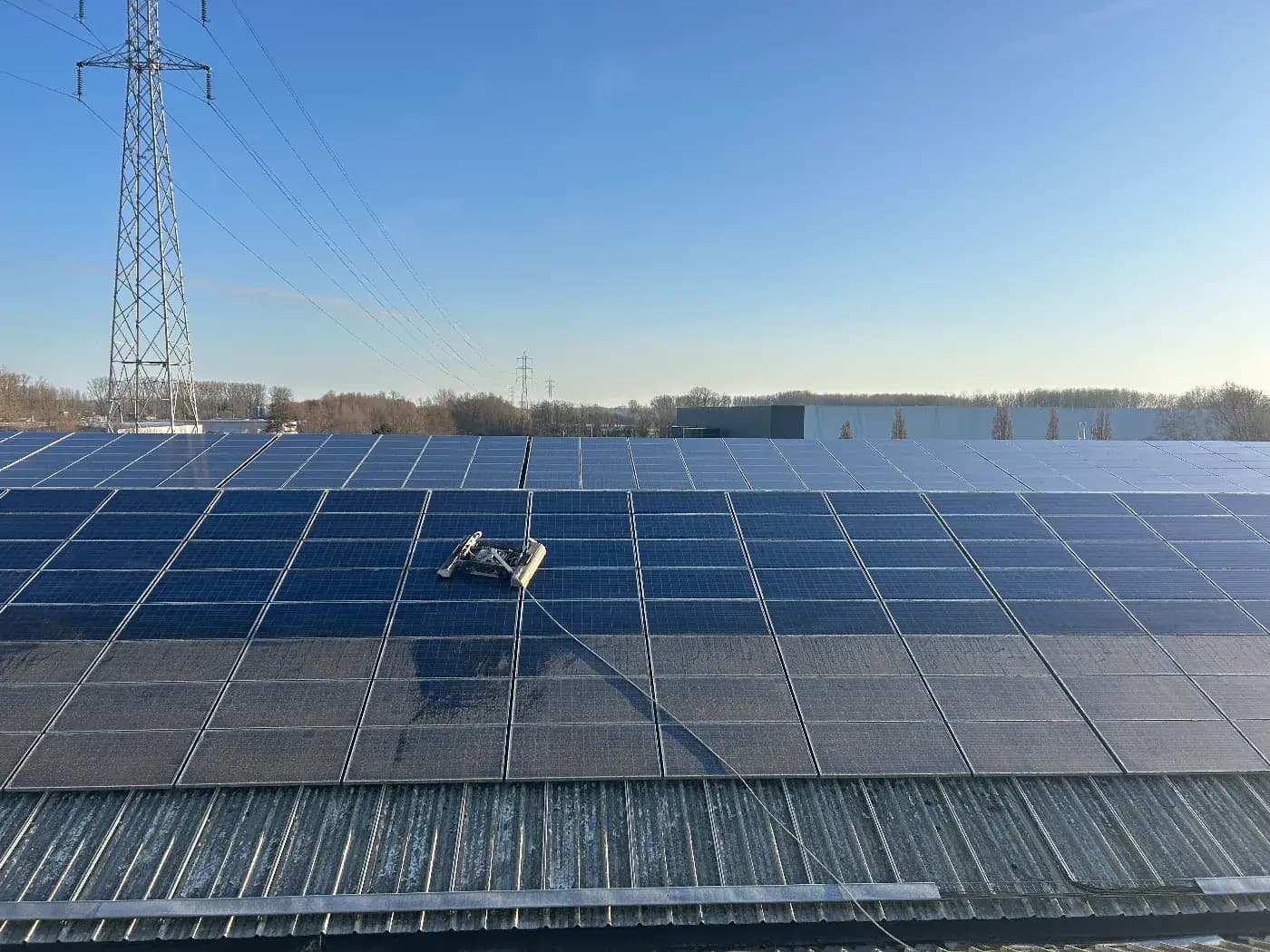
How often should you have your solar panels cleaned?
The ideal cleaning frequency depends on your situation. This overview is based on our experience.
| Situation | Main sources of soiling | Frequency | Estimated yield loss |
|---|---|---|---|
| Pitched roof in a residential areaResidential, urban or suburban setting, roof pitch over 15° |
| Every 1–2 years | 2–5% |
| Near industry or a motorwayLogistics, manufacturing, heavy traffic or an industrial estate |
| 1–2× a year | 5–15% |
| Flat roof or low pitchPitch under 15°: commercial buildings, warehouses and barns |
| 1–2× a year | 5–15% |
| Near farmlandArable fields, livestock farming and barns with ridge ventilation |
| 1–2× a year | 8–20% |
| Coastal areaWithin 10 km of the coast, exposed to sea winds |
| 1–2× a year | 5–15% |
| Solar park or large commercial siteGround-mounted and floating installations of 500 panels or more |
| 2–4× a year | 10–25% |
| After exceptional eventsSaharan dust, a pollen storm, construction work or a prolonged drought |
| Extra clean | Varies |
Tip: ideally, schedule your cleaning in early spring (March–April), just before the sunniest months, when you generate around 70% of your annual yield.
Clean your solar panels yourself or have them cleaned?
You can tackle a small pitched roof with light soiling yourself. Is your installation larger, hard to reach or heavily soiled? Then professional cleaning is safer and more thorough.
Cleaning solar panels yourself: a step-by-step guide
- 1
Choose the right moment
Clean early in the morning or on a cloudy day. That way you avoid thermal shock and the water doesn’t dry too quickly.
- 2
Remove loose dirt
Sweep away leaves, dust and sand with a soft brush or a leaf blower.
- 3
Clean with pure water
Ideally, use pure water.
Never use a pressure washer, abrasive sponges or household products such as Dreft washing-up liquid or soft soap.
DIY vs. professional solar panel cleaning
| Criterion | DIY cleaning | SolarcoRecommended |
|---|---|---|
| Result | Good for light dirtSurface dust and light soiling come off. Stubborn dirt such as moss and bird droppings often stays put. | Streak-free resultNo residue, with a visual inspection and a before-and-after report included. |
| Safety | Risky on roofsRisk of falls and electrocution. Without fall protection or a telescopic pole, it’s dangerous. | Certified and insuredTrained operators with fall protection and aerial work platforms, plus full liability insurance. |
| Damage inspection | NoneNo checks for hotspots, micro-scratches or faulty cells. Damage goes unnoticed. | Visual and thermal imagingEvery clean includes a visual inspection, with optional thermal imaging to screen for hotspots. |
| Warranty protection | UncertainThe wrong products or methods can void your manufacturer’s warranty. | Manufacturer-compliantOur method and materials meet the requirements of all major module manufacturers. |
| Time required | 1 to 3 hoursSetting up equipment, getting the ladder out, cleaning and tidying up. Not feasible for large installations. | 0 hours, we handle everythingWe schedule it, do the job and send you the report. You don’t need to be there. |
| Large installations | ImpracticalFrom 25 panels, it becomes too time-consuming and physically demanding, and panels are often out of reach. | Robots for 55,000+ panelsBattery-powered cleaning robots for solar parks and business rooftops of any size. |
| Conclusion | Fine for a small pitched roof with light soiling. | Residential, commercial or industrial? Solarco cleans every installation safely, with your manufacturer’s warranty intact and an inspection and report included. |
Professional solar panel cleaning
Having your solar panels cleaned doesn’t have to be complicated. You request a quote, we schedule a date and our team does the rest: you don’t even need to be there. Afterwards, you receive a report with before and after photos. No hassle, no surprises, no extra costs.
- 1
Thorough pre-inspection
A visual and thermal imaging check of your installation. We map hotspots and damage before we start cleaning.
- 2
Robotic cleaning with pure water
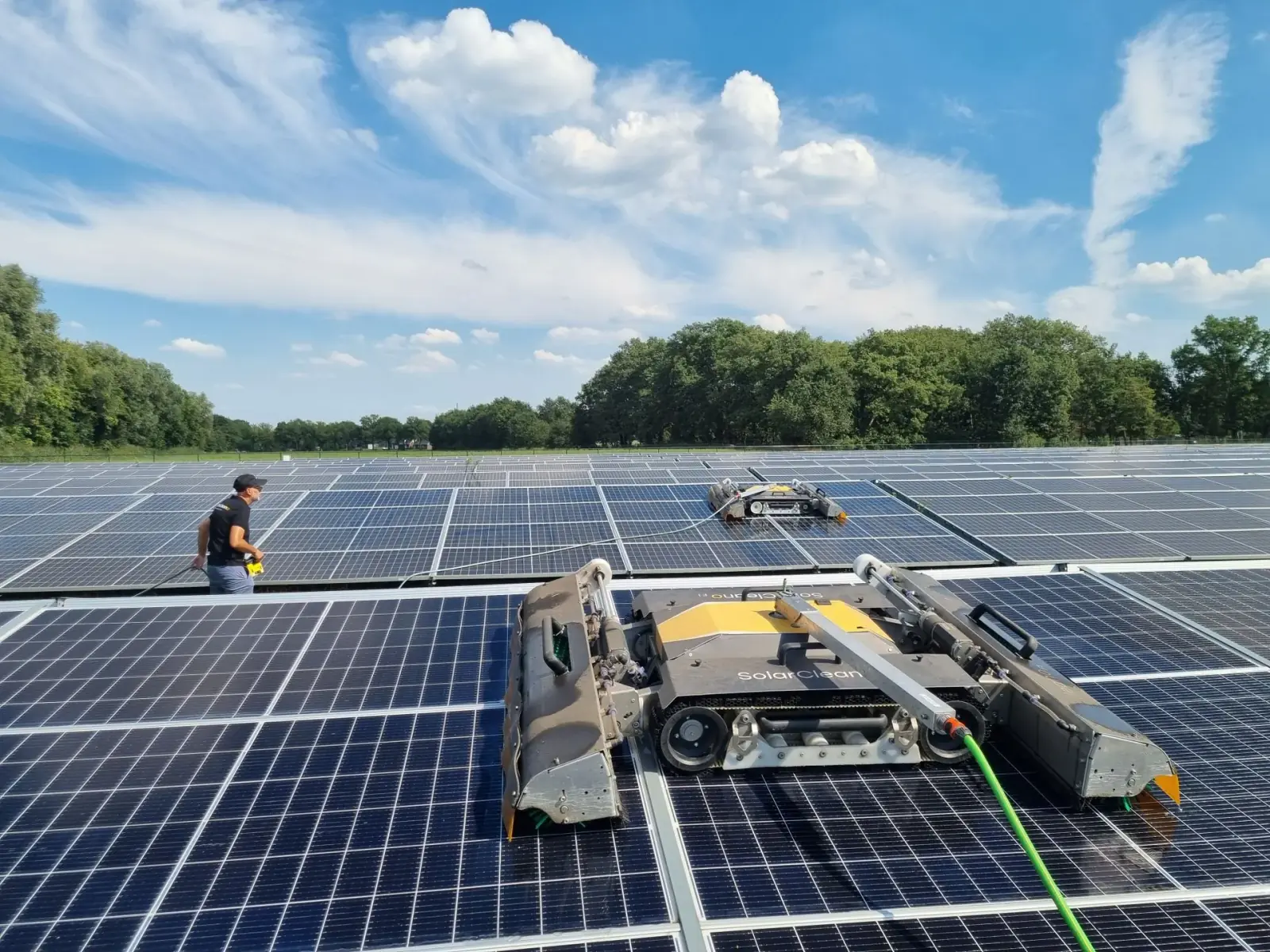
Our certified cleaning robots run on batteries, with no chemicals. Pure water dissolves the dirt and leaves no streaks or residue behind.
- 3
Quality control
After cleaning, we check every panel again. You receive a detailed report with before and after photos.
- 4
Aftercare and advice
Based on your installation, its surroundings and your production data, we draw up an optimal cleaning schedule.
The cost of solar panel cleaning
What a professional clean costs depends on your installation. That’s why we don’t work with standard prices. Instead, we put together a tailored quote for every situation: fair, transparent and with no surprises afterwards.
Curious what cleaning your PV installation would cost? Request your no-obligation quote. Within 48 hours you’ll receive a clear proposal, with inspection and report included.
What determines the price?
- 1The number of panels
- 2The type of installation: residential, commercial or industrial
- 3How accessible the roof is
- 4How dirty the panels are
Want to know more? Read our article on solar panel cleaning prices.
The benefits of professional solar panel cleaning by Solarco
- 01
Higher yield
Various studies show that a clean can improve yield by anywhere from a few percent to as much as 15%, depending on how dirty the panels are.
- 02
Longer lifespan
Preventing dirt build-up and hotspots helps your whole system last longer.
- 03
Safety and warranty
Many manufacturers recommend professional cleaning to keep your warranty valid. And climbing onto a roof yourself is not without risk.
- 04
Time savings
With the right tools and experience, we get a large installation done quickly. You can spend your time on other things.
- 05
Sustainable approach
Pure water and robotic cleaning keep the use of harmful chemicals to a minimum. Better for the environment and for the panels themselves.
Frequently asked questions about solar panel cleaning
Can’t find your question? Browse all frequently asked questions or get in touch.
Can I use a pressure washer on my solar panels?
No, never use a pressure washer. The high water pressure can damage the seals around the cells, wear down the anti-reflective coating and cause micro-scratches you can’t see with the naked eye. Water can also be forced under the panels and into the wiring, causing a short circuit. Instead, use a soft brush with pure water or call in a professional.
Why clean with pure water instead of tap water?
Pure water contains no minerals or limescale. Tap water contains limescale and minerals that leave white streaks and spots on the glass as it dries. That residue reduces light transmission and attracts new dirt faster. Pure water dries completely streak-free, so your panels stay clean for longer and capture as much sunlight as possible. Read more about cleaning solar panels with pure water.
Will I void my warranty if I clean my solar panels myself?
That depends on your manufacturer and the method you use. Most module manufacturers explicitly exclude damage caused by improper cleaning from their warranty, such as damage from pressure washers, abrasive products or harsh chemicals. A professional clean with pure water and soft brushes does meet the conditions of all major manufacturers. Always keep your cleaning report as proof in case you ever need to make a warranty claim.
What are hotspots and can cleaning prevent them?
Hotspots are areas on a solar panel that overheat locally because part of a cell is covered, for example by stubborn bird droppings, leaves or moss. The covered cell no longer produces energy, but it still has to carry the current from the other cells. That creates resistance and heat, and over time the cell can be permanently damaged. Regular cleaning removes the dirt that causes hotspots. During a professional clean, we also detect existing hotspots with a thermal imaging inspection.
Can I clean my solar panels with washing-up liquid such as Dreft, soft soap or all-purpose cleaner?
No. Household cleaning products such as Dreft washing-up liquid, soft soap, all-purpose cleaner and car shampoo attack the dirt-repellent coating on the glass. As a result, dirt actually sticks faster, your yield drops and the surface becomes more prone to scratches. Abrasive cleaners and scrapers are a no-go as well. Only ever clean your panels with pure water and a soft brush or sponge. Also read our article on cleaning solar panels with Dreft.
What’s the best time of day and year to clean my solar panels?
The best season is early spring (March–April), just before the sunniest months, which account for around 70% of your annual yield. Ideally, clean early in the morning or on a cloudy day. In full sun the water dries too quickly and leaves spots. Panels in the sun also get extremely hot: cold water on a hot panel can cause thermal shock and micro-cracks.
How do I know if my solar panels need cleaning?
There are three signs. Visual: you see a grey haze, spots, bird droppings or a green film on the glass. In your monitoring app: the performance ratio gradually drops compared with similar days or years. And after unusual conditions, such as a Saharan sandstorm, a prolonged drought or construction work nearby. Not sure? Send us a photo of your installation via the quote form and we’ll give you free, no-obligation advice.
Solar panel cleaning across Belgium, the Netherlands, Germany and France
From residential and commercial rooftops to large-scale solar parks: our specialists get panels gleaming clean throughout Belgium, the Netherlands, France and Germany. With our mobile cleaning units, we tackle every installation thoroughly and sustainably, whatever its size and wherever it is.

Namur90,000 panelsBE 
Limburg50,000 panelsBE 
Limburg48,000 panelsNL 
East Flanders37,500 panelsBE 
Flevoland37,000 panelsNL 
North Brabant25,000 panelsNL 
North Brabant20,000 panelsNL 
Namur13,000 panelsBE 
North Brabant13,000 panelsNL 
Brussels11,000 panelsBE 
Namur9,000 panelsBE 
West Flanders8,500 panelsBE
What our clients say
Snelle service, alles perfect in orde.
 Sofie De Weerd
Professionele aanpak. Heel tevreden. Kuist grondig met een duidelijke voor en na reportage. Waar andere firma's minder grondig werk leverde. Zijn ze nu als nieuw
 Lieven Boulliard
Super service. Alles ziet er als nieuw uit. Mogen volgend jaar zeker weer terugkomen. Top.
 Ann Luijten
Top service. Snel, goed en betaalbaar! Ook de communicatie verliep snel en duidelijk! Wat meer kun je wensen?
 Kris Heymans
Top service!
 Jelle Laeremans
Real Professional Company
 Troy
Top kerel. Een berichtje en enkele uren was hij bij mij thuis en zeer proper werk. TOP
 Walter Peeters
Ongelooflijke service! Top firma, wij zullen enkel nog voor deze firma kiezen. Snel, vriendelijk en ze hebben het beste materiaal bij. Hartelijk bedankt Solarco Cleaning!
 Ann Verheyen
Vriendelijk en goed contact. Snelle en prima service! Een aanrader! Tevreden klanten 😊
 Judy Vetters
Top service. Vriendelijke mensen 😉 goed en betaalbaar! Dan moet je bij Solarco Cleaning zijn 🥰 🌞 Zeer tevreden, tot volgend jaar 🌞
 Jill Humble
Topservice, en wat een verschil! Mogen volgend jaar terugkomen.
 Lydia Vermeylen