
TL;DR
Snow on solar panels mainly leads to temporary yield loss and additional load, not automatically to damage. Intervention only makes sense when snow stays on for several days, the missed kWh weighs on financially or business-critical processes and contracts are jeopardised.
- Use monitoring to objectively calculate missed production, duration of cover and impact by zone, similar to broader trajectories around solar panel maintenance.
- Prioritise safety, avoid hard tools, salt and treading on panels and only work with soft, telescopic tools or certified teams.
- Pay extra attention to flat roofs, large roofs and solar parks where snow stays longer and organisation, walkways and roof loads are crucial.
Lay down criteria, procedures and response times in a winter maintenance plan, and engage professionals for complex or large-scale installations.
Snow on solar panels is a recurring winter dilemma for owners and operators of medium to large installations in Belgium, the Netherlands and France. You want to rationally decide how snow removal from solar panels fits into your maintenance strategy, without unnecessary risks or costs. This article explains soberly what snow physically does to your installation, when intervention makes sense, how to remove snow safely without damage to panels or personnel, and how monitoring and design choices help to organise winter maintenance data-driven.
Snow on solar panels: what's the real problem (and what's not)?
Snow on solar panels blocks sunlight and temporarily reduces yields to (near) zero, while creating an extra weight package on panels, mounting systems and roof construction. For professionally designed systems, that weight is usually within standards, but for large roofs, outdated structures or exceptionally wet snow it can be a concern. Myths such as “snow cleans solar panels” or “any snow cover is dangerous” distort the picture: melting snow may carry some loose dirt, but does not solve structural contamination and is only problematic when load, safety or prolonged downtime are compromised.
For private roofs, snow periods in Belgium and the Netherlands are usually short, limiting the loss of yield on an annual basis. For solar parks, logistics complexes, agricultural buildings and industrial roofs, however, even a few days of solar panel snow can be directly felt in energy costs, contractual feed-in or ESG reporting. The key question is therefore less whether snow is “bad”, but if and when the effect on efficiency, construction and safety is large enough to justify intervention.
Effect of snow on yield and installation
The main impact of snow on solar panels is temporary production loss as the cells are physically covered. In string configurations, even one covered panel can limit the whole string, increasing the loss compared to just the covered area. A fresh layer of around 10 centimetres weighs around 10 kilograms per square metre, wet snow can reach up to 40 kilograms per square metre, which adds up quickly in large roof areas and can lead to increased loads in older or uncontrolled structures.
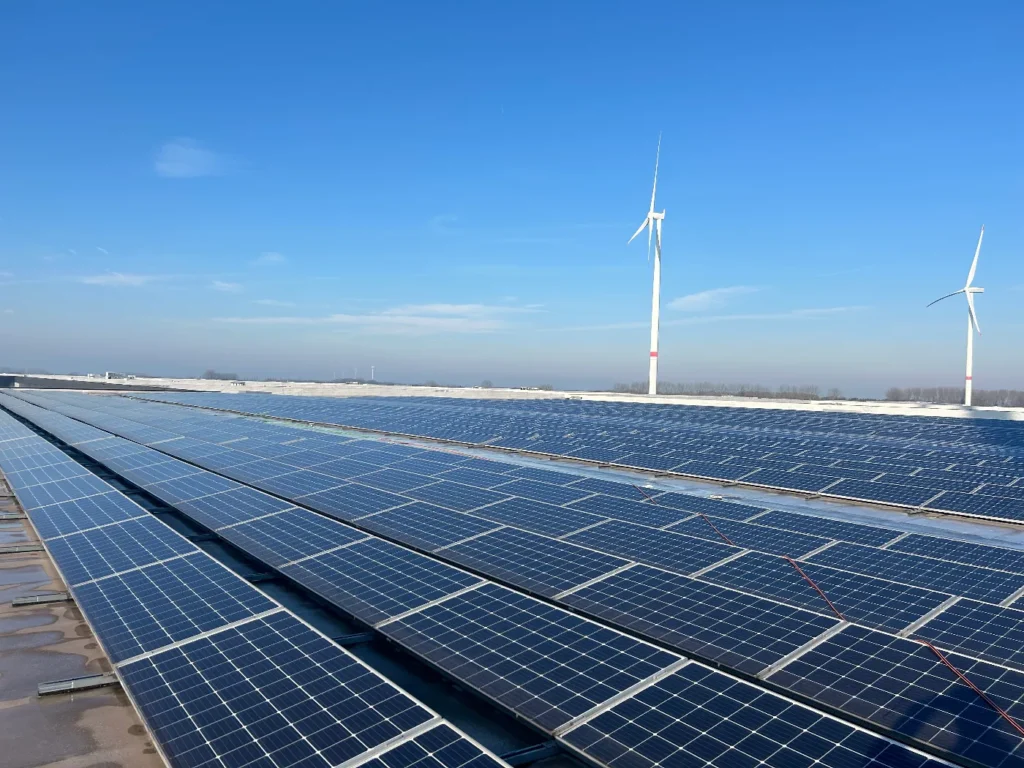
For larger commercial installations, solar parks and businesses with critical energy needs, each day's downtime can be immediately visible in costs and reports. Snow on solar flat roofs stays on average longer than on sloping systems because the slope effect is limited and accumulation occurs between rows. This makes the trade-off between waiting and intervening more complex, especially on flat roofs, and requires professional assessment such as Solarco carries out during inspections and expert tips around winter maintenance.
When does snow dissolve itself?
In many situations, snow dissolves itself due to solar radiation, slope angle and wind. Dark panels absorb radiation, even through a thin layer, warming the surface slightly and weakening the adhesion of the snow layer; from about 20 degrees of inclination, snow can then spontaneously slide off. This process is faster in well-ventilated mounting systems and south-facing roofs without obstacles blocking snow or creating additional shade.
With thicker layers, persistent frost or shading from upstands, surrounding buildings or trees, snow can remain for several days, even with sufficient slope. On flat roofs and shallow mounts, natural runoff is much slower, allowing prolonged cover. In these situations, active intervention can become an option, but only after you have assessed with monitoring and weather data whether the expected yield loss makes safe intervention cost-effective.
When snow removal from solar panels makes sense
For professional owners, the question is not only how to remove snow from solar panels, but especially when it is rational to do so. Duration of snow cover is often the deciding factor: a thin layer that disappears within 24 hours rarely outweighs the costs and safety risks of intervention. Only in cases of predicted prolonged cold, limited solar radiation and a snow cover that remains for several days does snow removal come into the picture.
Slope, orientation and roof type determine how quickly panels recover on their own. Steep, south-facing roofs tend to clear quickly, while snow on solar panels flat-roofed and on shallow mounting systems remains longer. Critical production processes and contracts also play a role: when own generation is essential for business continuity or when feed-in generates significant revenue, a shorter recovery time of intervention costs may be acceptable. A data-driven approach, as also used in analyses around efficiency of solar panels, avoids decisions by feel.
Assessment framework for business installations
A practical assessment framework starts by comparing historical yield data with actual production during snow periods. Based on monitoring, calculate the kilowatt hours missed per day and multiply it by your actual or contractual kWh value. Contrast that with the total cost of safe, professional intervention, including preparation, fall protection and possible shutdown of zones on the site; only when the business case is positive and risks are manageable is intervention defensible.
Examples: logistics roof, agricultural shed, solar park
A logistics roof with 1,500 panels can lose thousands of kilowatt hours in a snow week, making professional snow removal financially and operationally interesting. An agricultural shed with several hundred panels often sees snow for longer due to limited slope, but the overall impact on an annual basis remains relatively limited, so wait-and-see is usually preferred. Solar parks typically have landscaped walkways and anchor points, allowing for quick action, but even there, safety procedures, available personnel and contractual obligations need to be weighed before you decide to actively intervene.
How to safely remove snow from solar panels: methods and roadmap
Safety is key in solar panel snow removal, especially on commercial roofs and solar parks. Improper methods quickly lead to broken glass, damaged coatings, microcracks in cells, leaks in cabling or damage to roofing, with higher costs than the temporary loss of efficiency you wanted to avoid. Moreover, working at height with snow and ice poses significant fall risks, making professional practices and certified fall protection essential.
What you better never do with snow on panels
Do not use hard brushes, metal scrapers or improvised tools to push snow away, as this will scratch glass and damage frames. Do not spread salt or chemical de-icers on panels; these corrode coatings and metal parts and pose environmental risks. Never walk on panels or slippery roofs without training and fall protection, and do not use high-pressure cleaners in freezing temperatures, as thermal shock can crack cells and damage seals.
Roadmap: de-icing solar panels without damage
Start with a visual inspection from the safe ground or via cameras to assess thickness, type of snow and accessibility by zone. Then determine whether installations are safely accessible via existing walkways, ladders or access points and whether additional safety measures are needed; light, dry snow on accessible panels can be removed using soft, telescopic tools with rubber or foam edges, working from the bottom up so that snow falls down in front of the panel. Document which areas you are treating and, where possible, combine this with other work such as visual inspections or a planned solar panel inspection.
For large roofs, steep slopes or ground installations engaging a professional is the safest choice. Certified teams like Solarco's work with fall protection, know the specific mounting systems, align snow removal with existing maintenance procedures and record findings in reports. Snow management is often combined with other services such as thermographic inspection, regular cleaning according to the guidelines from how to clean solar panels and osmosis-based methods as described at cleaning solar panels with deionized water.
Specific situations: flat roof, large roofs and solar parks
Snow on solar panels on a flat roof has different requirements than snow on sloping roofs. Because panels are less inclined, snow stays longer and can accumulate between rows, increasing both mechanical stress and water drainage problems. In addition, walking routes are often limited and ballast and fixing points are hidden under the snow, increasing trip and fall risks and necessitating professional assessment and planning.
Snow on solar panels on a flat roof
With snow on flat roof systems, it is crucial to know in advance how roof and mounting structure are designed: what loads are allowed, are there snow guards, and are there fixed walkways and anchor points for fall protection. Without this information, any intervention becomes a risky gamble. Professionals such as Solarco analyse the situation, match approach and sequence per zone to structural constraints, and often combine snow management with wider general maintenance of solar panels, bringing together inspection, cleaning and any remedial action efficiently.
Large roofs and solar farms: organisation and safety
On large company roofs and solar farms, organisation is at least as important as technology, because several hectares of panels cannot be cleared of snow all at once. A good plan describes which strings or zones are prioritised, which access points and walkways are used, how teams do not interfere with each other and how risks of snow shear from higher roof surfaces on underlying panels are controlled, for example with appropriate snow catcher solar panels and well thought-out roof details. In management plans that Solarco draws up for customers, winter maintenance is explicitly included so that tasks, responsibilities and response times are clear in advance.
Data-driven maintenance in winter: measuring is knowing
Efficiency loss due to snow on solar panels is often underestimated as long as it is not measured. Monitoring at string, inverter or park controller level reveals which areas are covered and how many kilowatt hours you are losing, allowing you to substantiate decisions on snow removal. With remote monitoring and SCADA systems, you get insight into performance, failures and anomalies from the office, similar to how you also assess pollution impacts in broader trajectories around solar panel maintenance and long-term returns.
Monitoring yield and snow impact
By comparing actual output figures with historical data or expected production for the same period, you can quickly recognise deviations that are not explained by failures or shading. If output in a snow period is structurally lower than the model, snow cover is a likely cause and you can calculate the economic impact in euros per day. Dashboards, reports and exports then support you in justifying choices to management, auditors and owners, especially when several sites in different regions are affected by snow at the same time.
When does snow removal fit into a maintenance plan?
Snow removal is ideally part of a wider solar panel maintenance winter plan that also includes inspections, periodic cleaning and preventive measures. Define objective criteria in advance, such as a maximum allowable duration of full cover or a limit for missed yield, and lay down the procedures to be followed if these thresholds are exceeded; this is in line with the same professional approach Solarco uses in its general maintenance services and industrial cleaning projects for e.g. solar panels on factory sites.
Do you regularly have snow on your solar panels? Here's how Solarco can help
Not every snow situation requires action, but in medium to large installations, loss of efficiency, safety at height and management responsibility do play a role. Solarco supports professional owners and operators with technically sound advice on how snow removal from solar panels fits into a broader maintenance and monitoring plan, so that decisions are made based on data rather than gut feeling. Our certified teams combine safe working methods at height with reports that make clear what impact interventions have on performance and long-term returns.
Do you have recurring snow problems, complex roof arrangements, multiple sites or critical processes for which you want to organise solar panel snow removal professionally? Contact us for a technical discussion on winter maintenance, monitoring and maintenance strategy so that your solar panel installations in Belgium, the Netherlands and France continue to perform predictably and responsibly all year round.
FAQ
When does it make sense to remove snow from solar panels?
Removal is usually only cost-effective in cases of long-term cover (several days), expected substantial missed kWh or when contractual/business-critical processes depend on yield. Use monitoring to calculate missed production and costs and compare that with total intervention costs before deciding. A thin layer that melts within 24 hours usually does not need to be removed.
Can I remove snow from my panels myself?
For small private systems on safe, accessible slopes, you can use light, soft tools with a rubber or foam edge from the ground. For flat roofs, large roofs or work at height, we recommend using professionals because of fall hazards and risk of damage. When in doubt: contact a certified party.
Which methods are safe and which should I avoid?
Use soft telescopic brushes with rubber or foam edges and sweep from bottom to top so snow falls down. Avoid hard brushes, metal scrapers, salt, chemical de-icers and walking over panels without fall protection; those methods often cause glass or frame damage and deterioration of coatings.
How does monitoring help in the decision to intervene?
Monitoring at string or inverter level shows which zones are covered and how many kWh you are missing per day. Compare actual output with historical or model values to determine economic impact and set thresholds (e.g. maximum days of full coverage or euros per day missed) that determine in your maintenance plan when intervention is warranted.
What should I do in case of snow on a flat roof or solar farm?
Get a professional assessment of the roof structure, allowable snow load and availability of anchor points/walks. Prioritise areas based on critical output and safety, work according to a pre-arranged plan and preferably combine snow removal with inspection or cleaning. Consult specialists for a site-specific approach and planning.



 English (UK)
  Nederlands (België)
  Français
  Deutsch